Warning sign
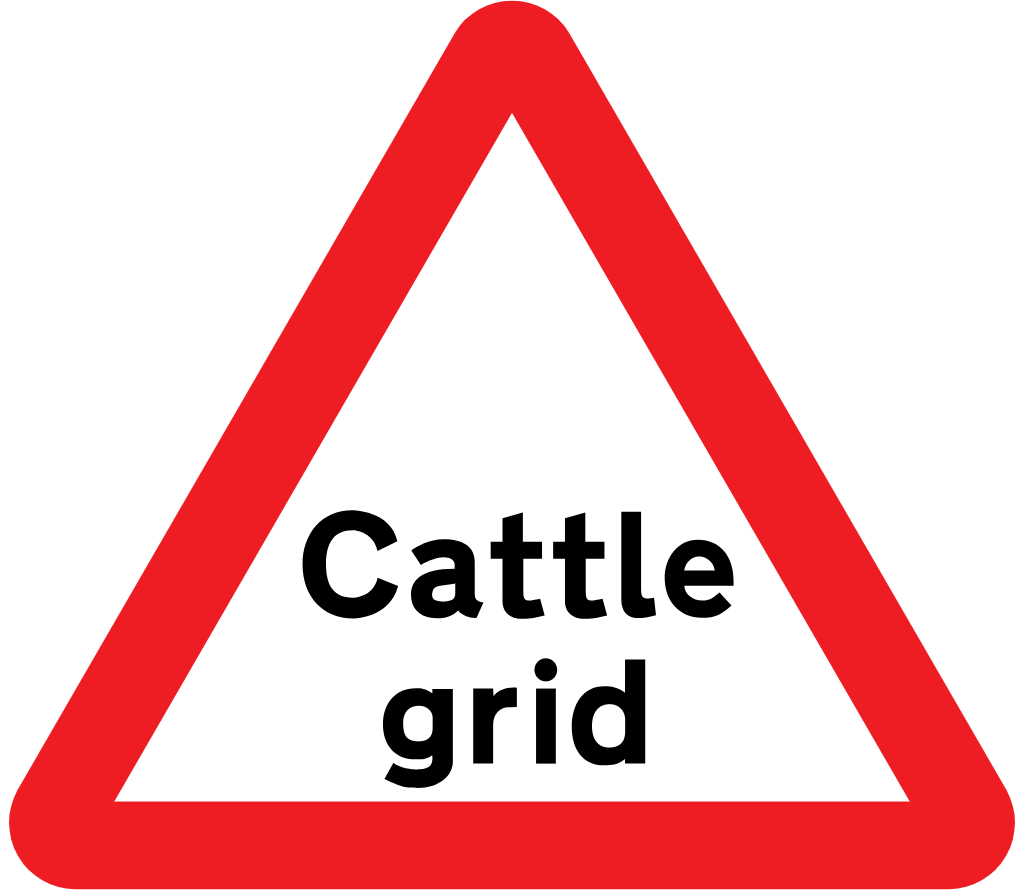
Cattle grid sign
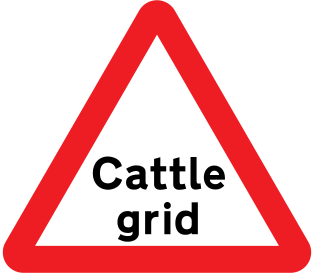
What does the Cattle grid sign mean?
Warns of a cattle grid ahead. Slow down and cross it carefully, and expect animals nearby.
Also known as: Cattle grid ahead
What it means
There is a cattle grid ahead.
A cattle grid is a set of bars set into the road that animals will not cross. It keeps livestock in their fields without a gate.
Slow down and cross it carefully, and watch for animals on the road beyond it.
Where you'll see it
At the boundary of open farmland or moorland where animals roam free.
Rules to know
The sign warns of a cattle grid. A version indicates a bypass for horse-drawn vehicles and animals.
Know Your Traffic Signs, p. 15
When passing animals, drive slowly, give them plenty of room and be ready to stop. Watch out for animals on unfenced roads.
The Highway Code, Rule 214
Common mistakes
Mistake: Crossing at speed.
Instead: Slow down and cross steadily. Animals may be close to the road beyond the grid.
Test yourself
Recalling the answer helps it stick. Pick an answer to see how you did.
Question 1 of 1
What does this sign mean?
Ready for more? Take the Warning Signs Quiz
Download this sign
© Crown copyright. Free to reuse under the Open Government Licence v3.0, as long as the sign is reproduced accurately and not in a misleading context.
Related signs
Similar
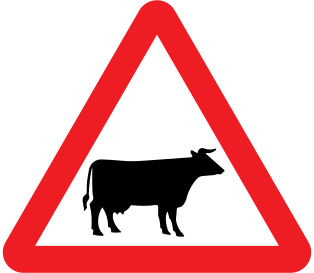
Cattle
Warning sign
Cattle may be on the road.
Similar
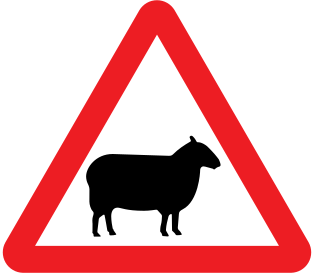
Sheep
Warning sign
Sheep may be on the road.
Similar
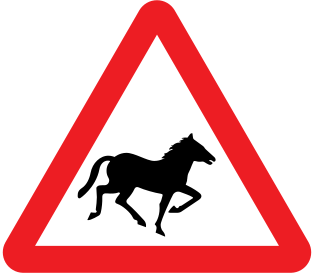
Wild horses or ponies
Warning sign
Another animal warning.
More warning signs
All warning signs
Share this sign
Pinterest (opens in a new tab)Facebook (opens in a new tab)X (opens in a new tab)WhatsApp (opens in a new tab)EmailSources
- Know Your Traffic Signs (Department for Transport, Sixth edition, 2023), Warning signs, p. 15
- The Highway Code, Rule 214
Sign image: Department for Transport, Traffic sign images (diagram 552). © Crown copyright, reused under the Open Government Licence v3.0.
Last reviewed 11 October 2026. This page explains the sign in our own words; for the full rules, see The Highway Code. How we source and check content