UK road signs and their meanings
Every UK road sign belongs to one of five types, and its shape and colour tell you which. Start with the types below, then open any sign to see what it means in plain English and the rule behind it.
Looking for one sign? Search all 261 signs.
Start with the five types of sign
New to road signs? Begin with warning signs, the ones you'll meet most, then work through the rest.
Warning signs
63 signs
Usually a triangle with a red border
Regulatory signs
72 signs
Usually a circle: red ring prohibits, blue circle instructs
Information signs
70 signs
Usually a rectangle
Motorway signs
16 signs
Blue direction signs and overhead signals
Temporary signs
40 signs
Often on a yellow background at road works
Looking for one sign?
Or find it by shape:
Read a sign by its shape
Before you can read the symbol, the shape tells you what kind of message a sign is giving.
Circles give orders
Red circles mostly tell you what you must not do. Blue circles mostly tell you what you must do.
Triangles warn
Most warning signs are triangles with a red border. They tell you about a hazard ahead.
Rectangles inform
Rectangular signs mostly give information or directions, such as routes, places and facilities.
There are exceptions: Stop and Give way have their own shapes, to give them extra prominence. Based on the Highway Code (opens GOV.UK).
What the colours mean
Colour narrows it down further once you know the shape.
- Red
- A red ring or border: something is prohibited, or a hazard is ahead.
- Blue
- A blue circle: a positive instruction. A blue rectangle: information, or a motorway sign.
- Green
- A green background: a primary route. Motorways use blue.
- White
- A white background: a direction sign for a non-primary route, or a plate with extra detail.
- Yellow
- A yellow background: a temporary sign, usually for road works or a diversion.
- Brown
- A brown background: tourist destinations and facilities.
Most looked-up road signs
The signs people search for most. Open one to see its meaning, the rule behind it and the signs it is mixed up with.
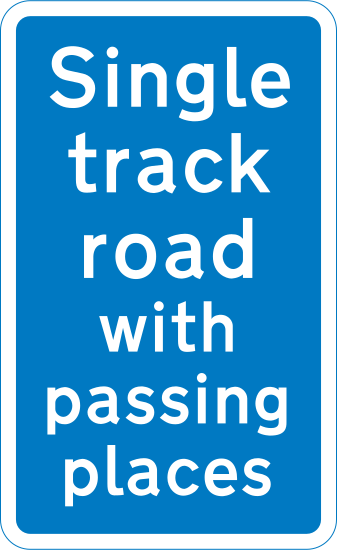
Single track road with passing places
Information sign
Narrow road ahead with passing places
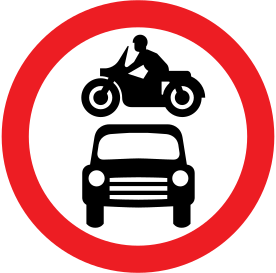
No motor vehicles
Regulatory sign
No motor vehicles
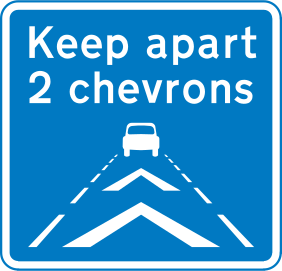
Keep apart 2 chevrons
Motorway sign
Keep at least two chevrons from the vehicle in front
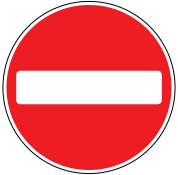
No entry
Regulatory sign
No entry for vehicles.
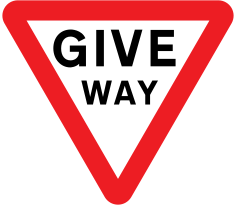
Give way
Regulatory sign
You must give way to traffic on the major road ahead.
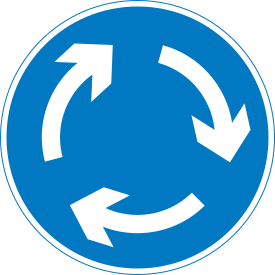
Mini-roundabout
Regulatory sign
Give way to traffic from your immediate right and go round the central markings.
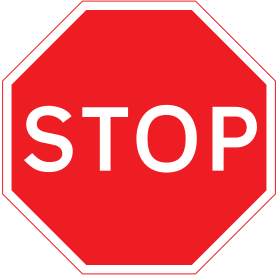
Stop
Regulatory sign
You must stop at the white line, then go only when it's safe.
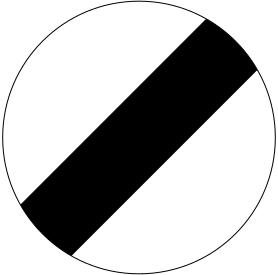
National speed limit
Regulatory sign
The national speed limit applies.
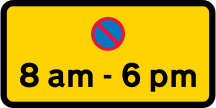
No waiting
Regulatory sign
You must not wait or park here during the times shown.
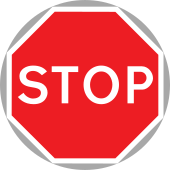
Stop/Go board
Temporary sign
Manual STOP/GO control at road works
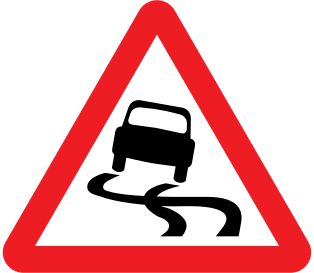
Slippery road
Warning sign
Warns that the road ahead may be slippery.
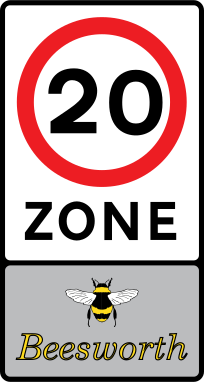
20 mph zone
Regulatory sign
A 20 mph speed limit applies throughout the zone.
How to learn UK road signs
- Step 1
Read the shape and colour
That tells you the kind of message before you read the symbol.
Shapes and colours - Step 2
Study one type at a time
Start with warning signs, then regulatory, and compare signs that look alike.
Start with warning signs - Step 3
Test yourself
Flashcards and short quizzes show which signs you know and which to review.
Try the flashcards
Revising for your driving theory test?
DVSA has named road and traffic signs as one of the topics learners most often get wrong. See what the test involves, how to revise the signs, and the lookalikes that catch people out.
All 261 UK road signs
Every sign we've published, by type. Open a list to see its signs. We add signs once each one has been checked against official sources.
Warning signs (63)
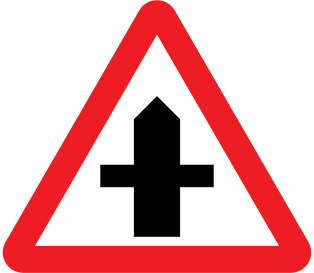 Crossroads
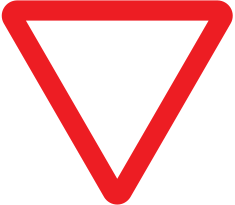 Give way ahead
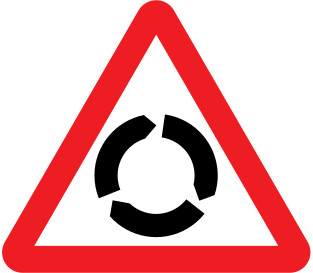 Roundabout
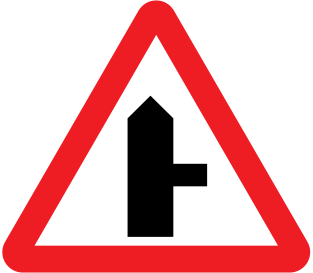 Side road
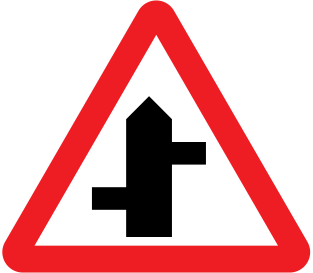 Staggered junction
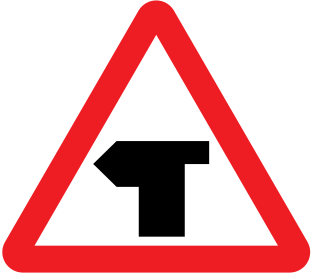 T-junction
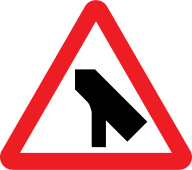 Traffic merges onto main carriageway
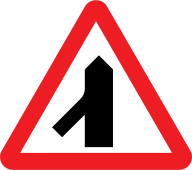 Traffic merging from left
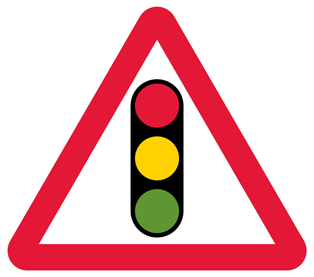 Traffic signals ahead
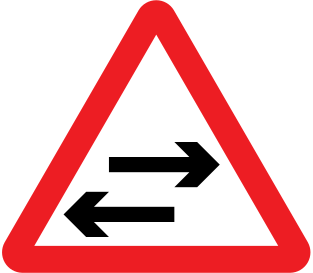 Two-way traffic crossing
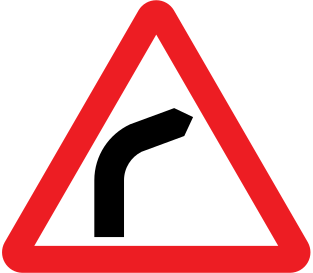 Bend ahead
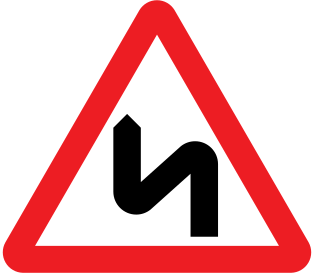 Double bend
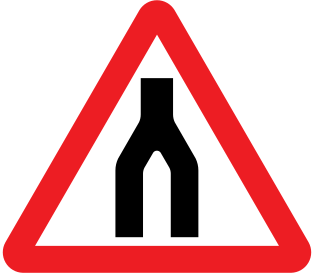 Dual carriageway ends
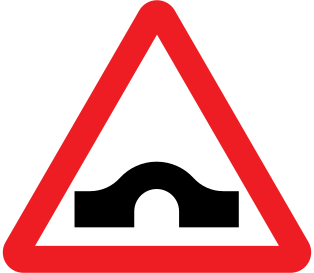 Hump bridge
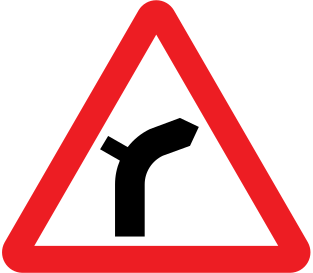 Junction on a bend
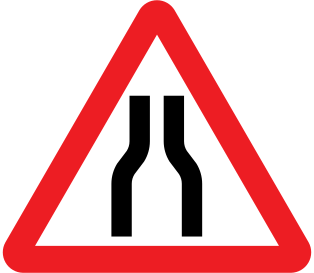 Road narrows
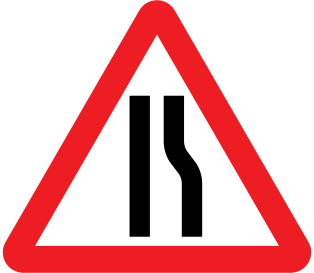 Road narrows on right
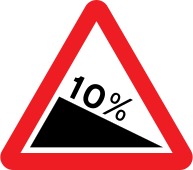 Steep hill downwards
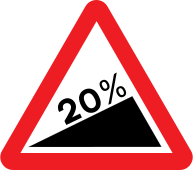 Steep hill upwards
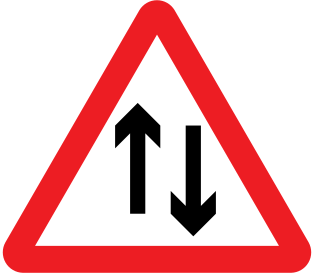 Two-way traffic
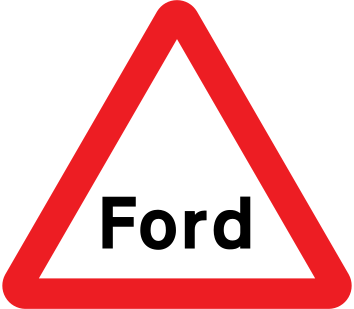 Ford
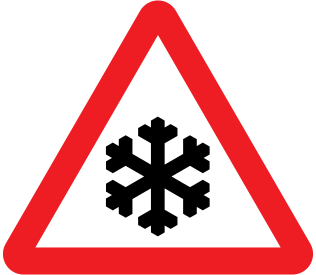 Risk of ice
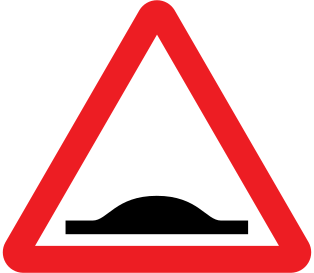 Road humps
- Slippery road
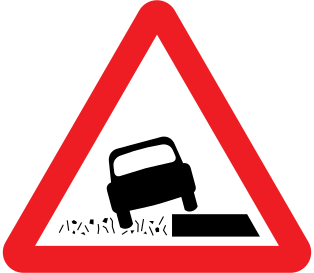 Soft verges
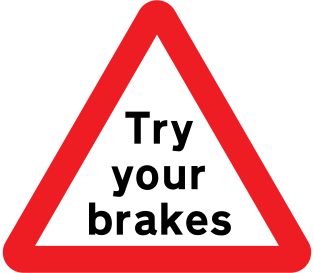 Try your brakes
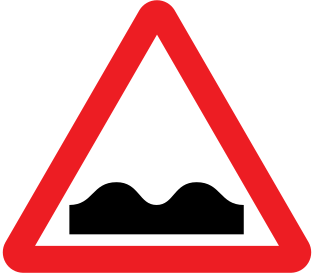 Uneven road
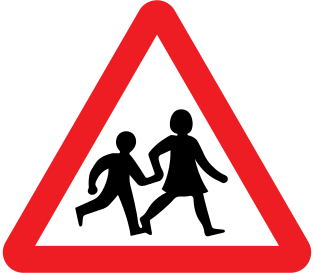 Children going to or from school
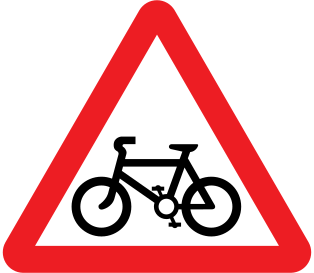 Cycle route crossing ahead
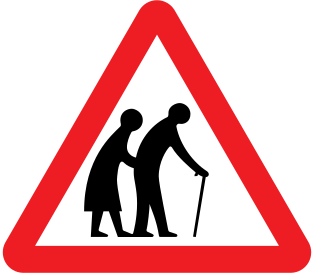 Frail pedestrians
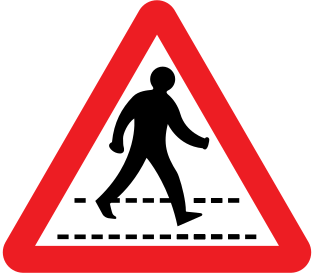 Pedestrian crossing
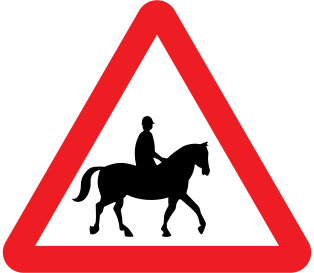 Accompanied horses or ponies
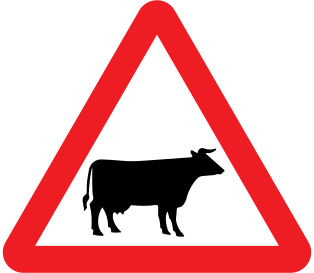 Cattle
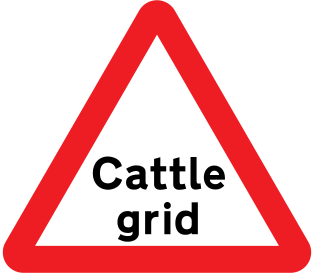 Cattle grid
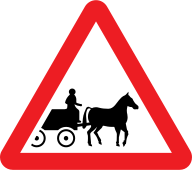 Horse-drawn vehicles
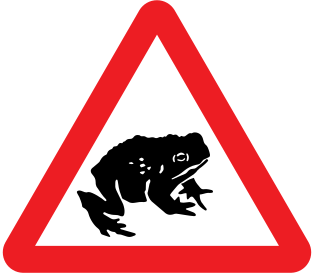 Migratory toad crossing
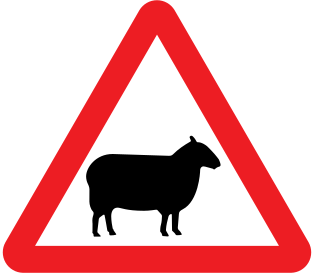 Sheep
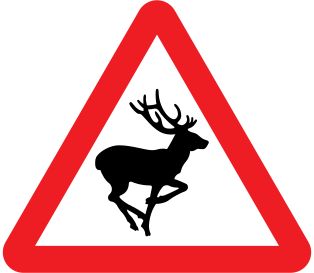 Wild animals
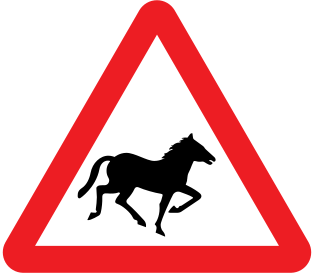 Wild horses or ponies
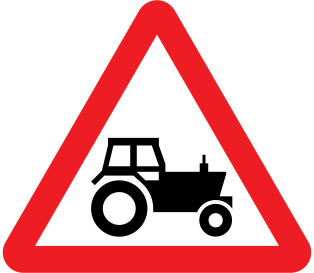 Agricultural vehicles
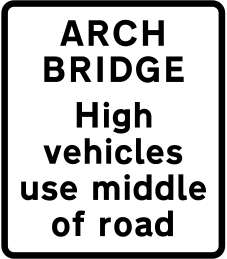 Arch bridge: high vehicles use middle
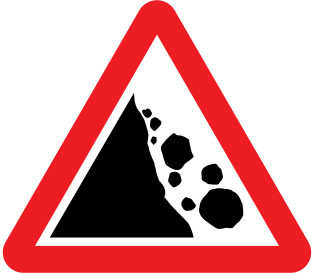 Falling or fallen rocks
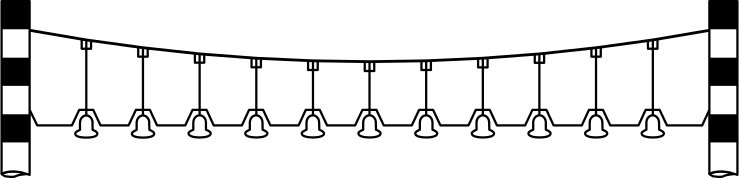 Height warning bells
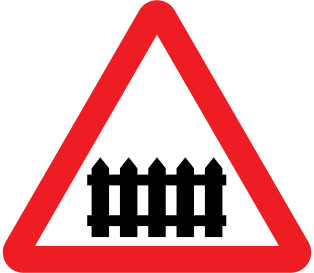 Level crossing with barrier or gate
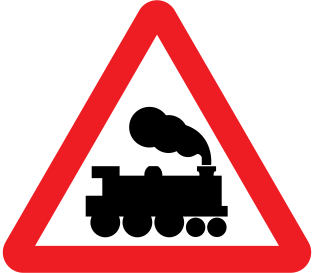 Level crossing without barrier or gate
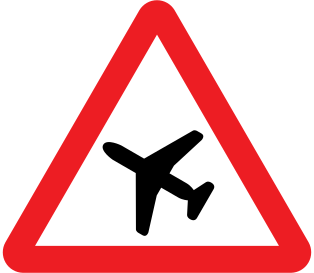 Low-flying aircraft
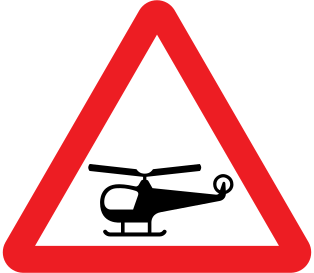 Low-flying helicopters
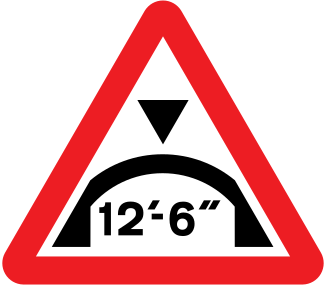 Maximum headroom
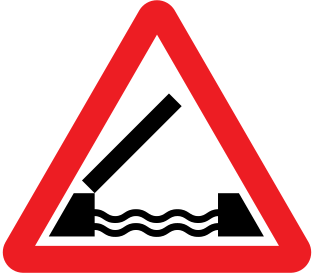 Opening or swing bridge
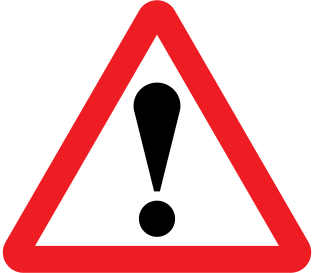 Other danger
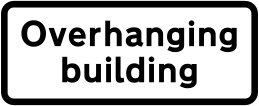 Overhanging building
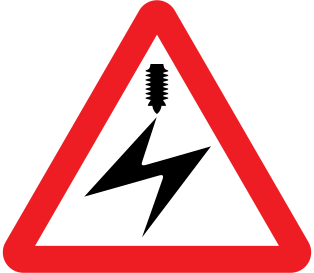 Overhead electric cable
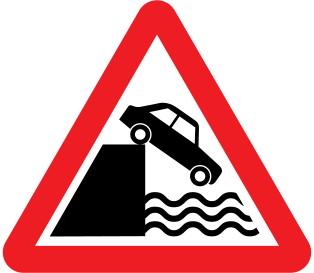 Quayside or river bank
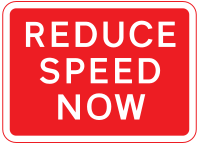 Reduce speed now
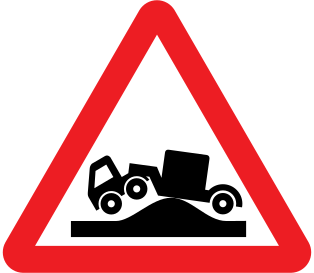 Risk of grounding
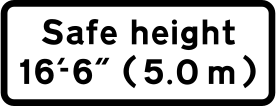 Safe height plate
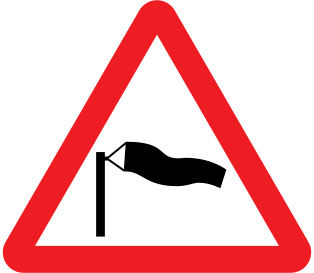 Side winds
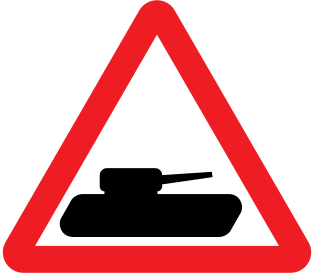 Slow-moving military vehicles
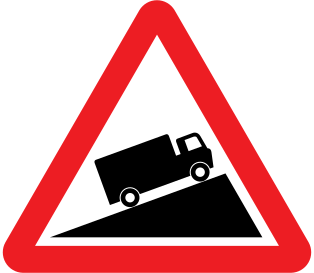 Slow-moving vehicles
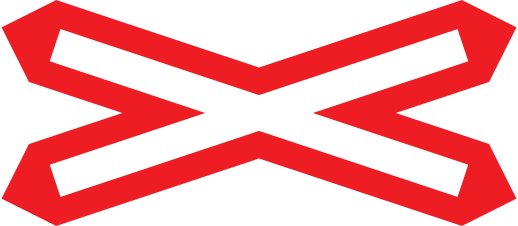 St Andrew's cross
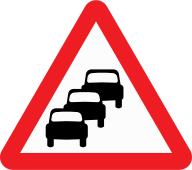 Traffic queues likely ahead
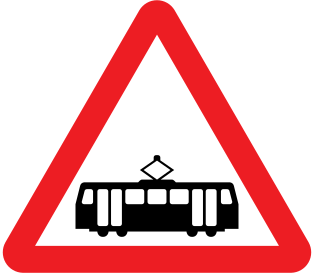 Trams crossing ahead
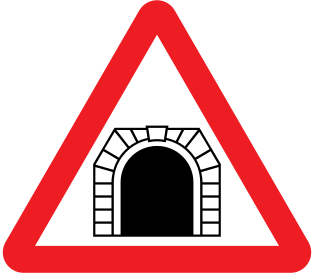 Tunnel
Regulatory signs (72)
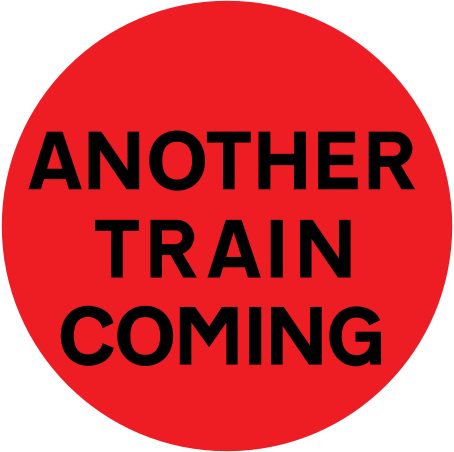 Another train coming
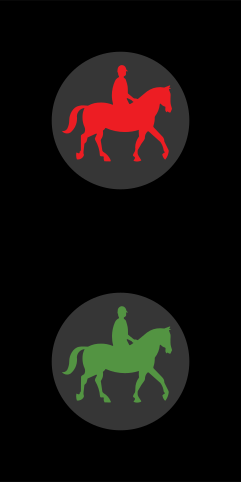 Equestrian crossing far-side signals
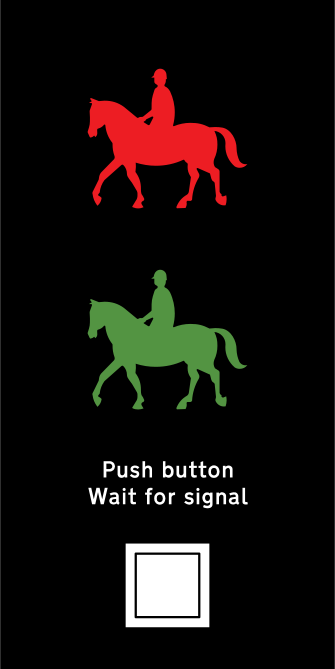 Equestrian crossing signals
- Give way
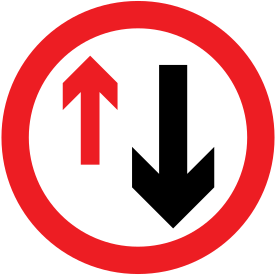 Give way to oncoming vehicles
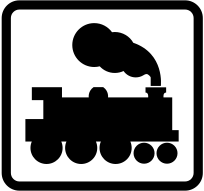 Give way to trains (locomotive plate)
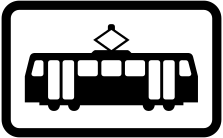 Give way to trams (tram plate)
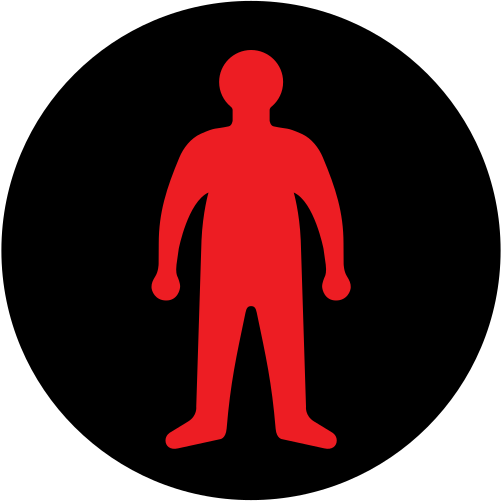 Level crossing pedestrian signal
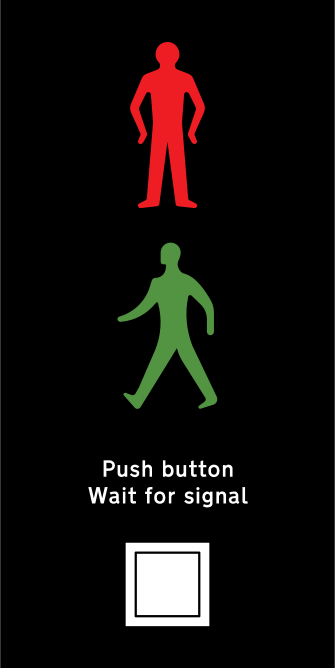 Puffin crossing signals
- Stop
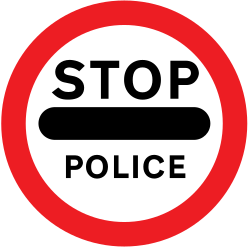 Stop (police)
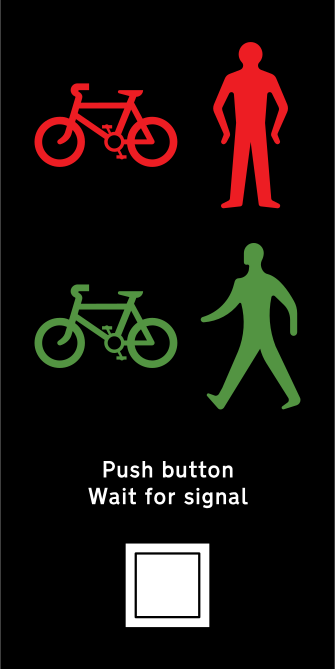 Toucan crossing signals
- No entry
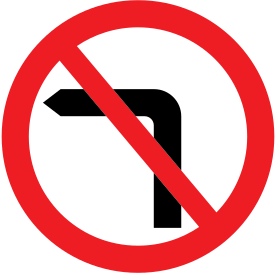 No left turn
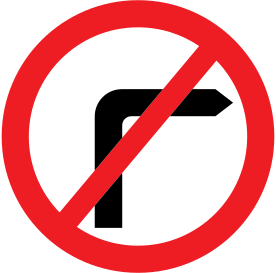 No right turn
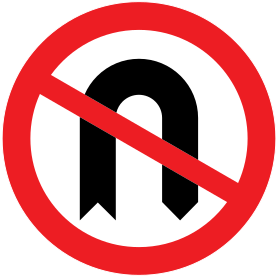 No U-turns
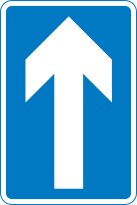 One-way traffic
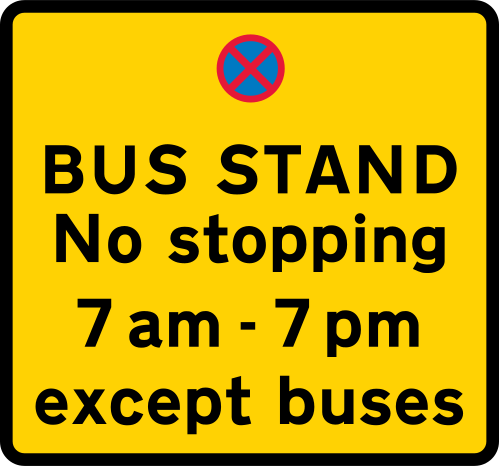 Bus stand
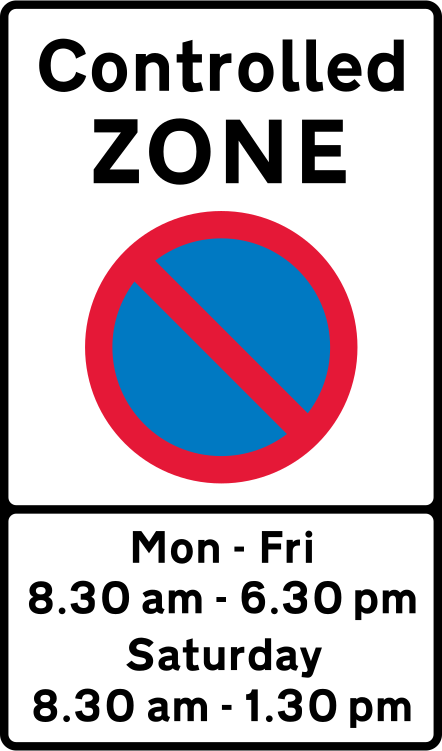 Controlled parking zone
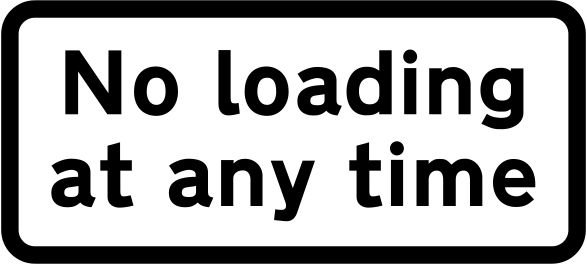 No loading at any time
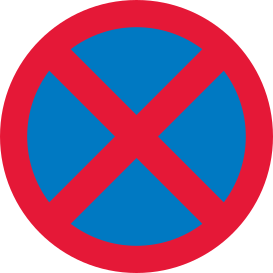 No stopping (clearway)
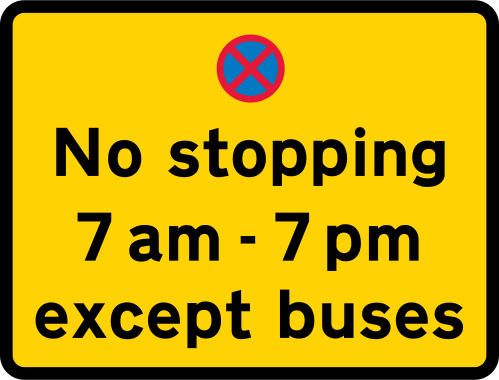 No stopping except buses
- No waiting
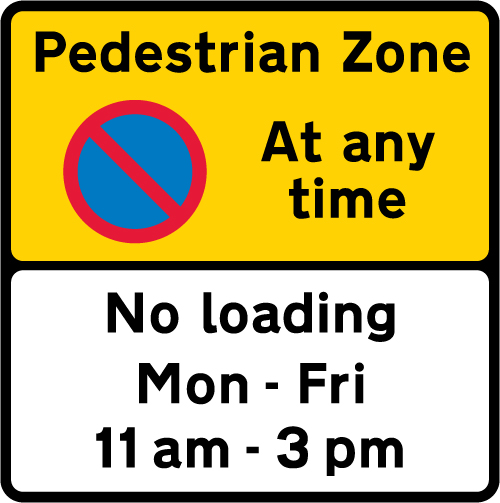 Pedestrian zone waiting restriction
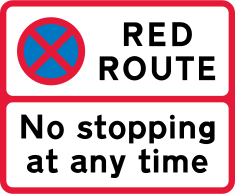 Red route: no stopping at any time
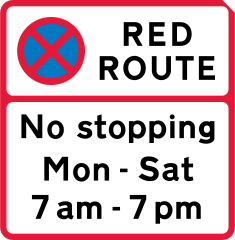 Red route: no stopping at times shown
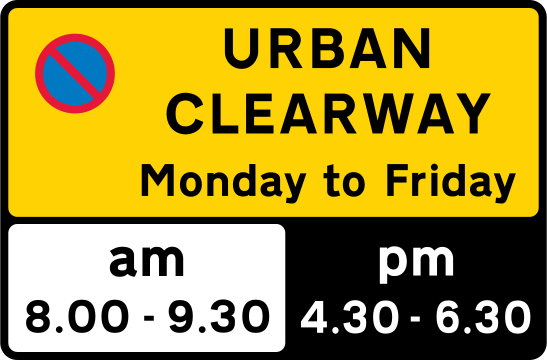 Urban clearway
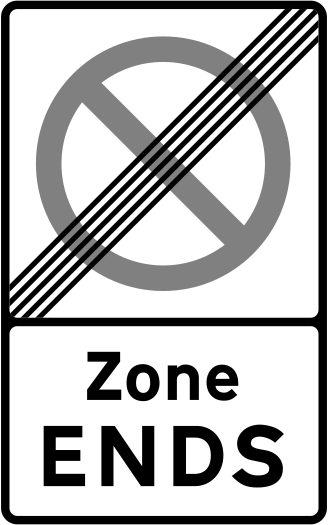 Zone ends
- 20 mph zone
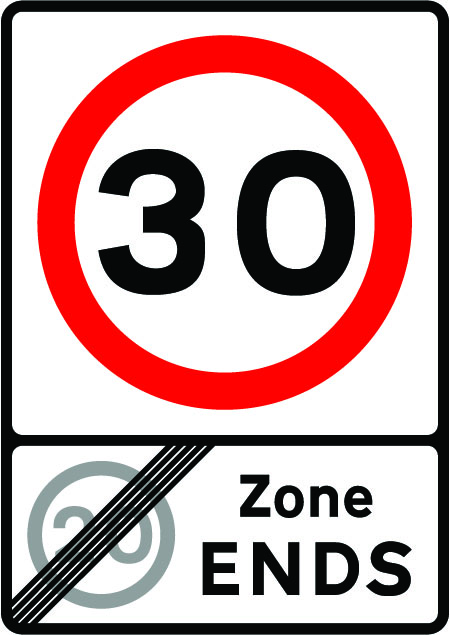 End of 20 mph zone
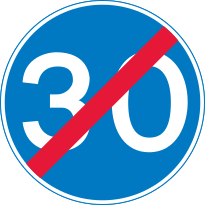 End of minimum speed
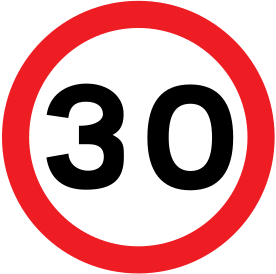 Maximum speed limit
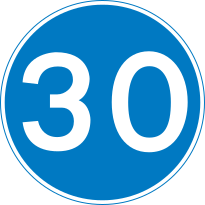 Minimum speed
- National speed limit
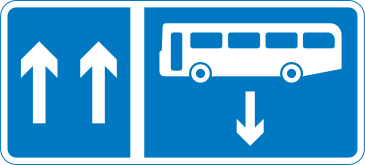 Contraflow bus lane
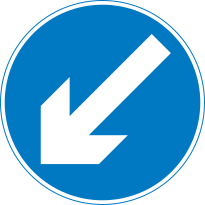 Keep left
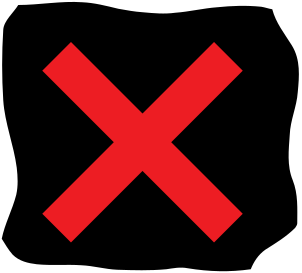 Lane closed (red cross)
 Lane open (green arrow)
- Mini-roundabout
 Move to the next lane (white arrow)
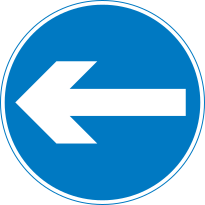 Proceed in direction indicated
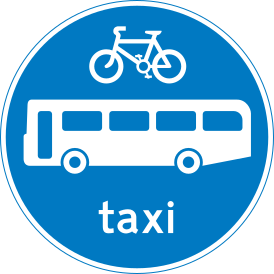 Route for buses, cycles and taxis
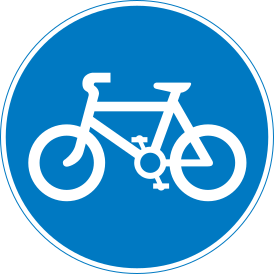 Route for pedal cycles only
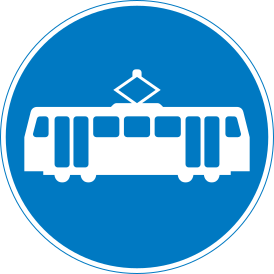 Route for trams only
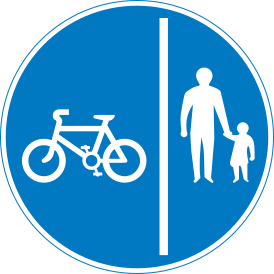 Separated route for cyclists and pedestrians
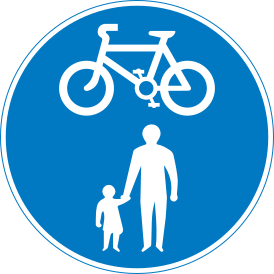 Shared route for cyclists and pedestrians
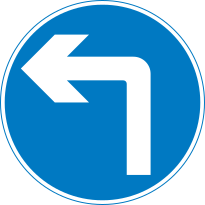 Turn left ahead
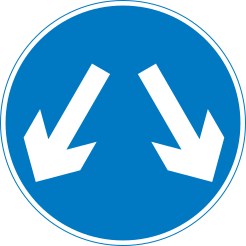 Vehicles may pass either side
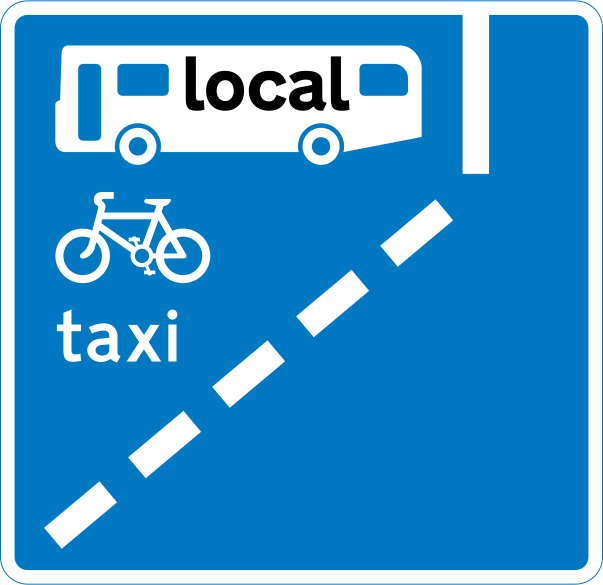 With-flow bus lane ahead
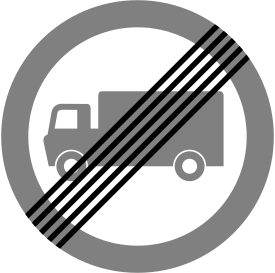 End of goods vehicles restriction
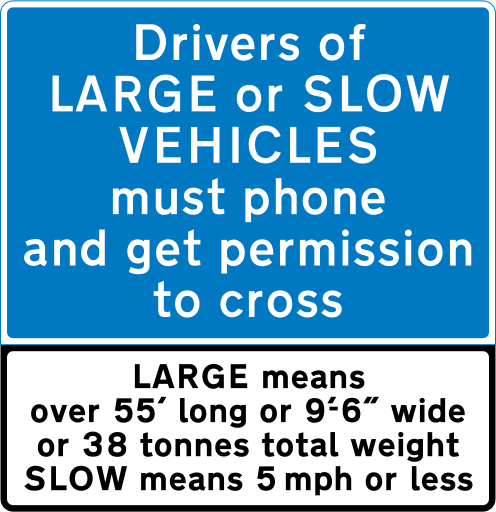 Large or slow vehicles: phone to cross
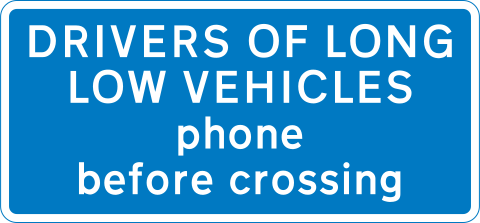 Long low vehicles: phone before crossing
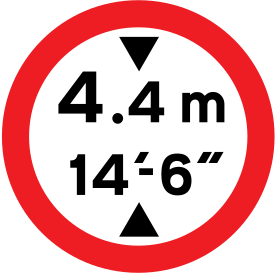 Maximum height
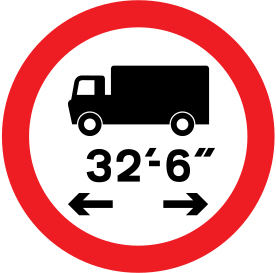 Maximum length
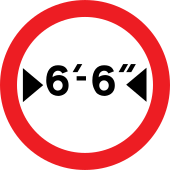 Maximum width
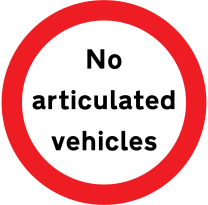 No articulated vehicles
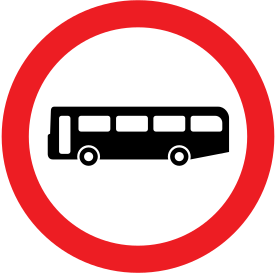 No buses
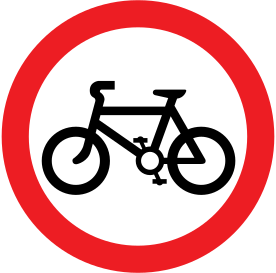 No cycling
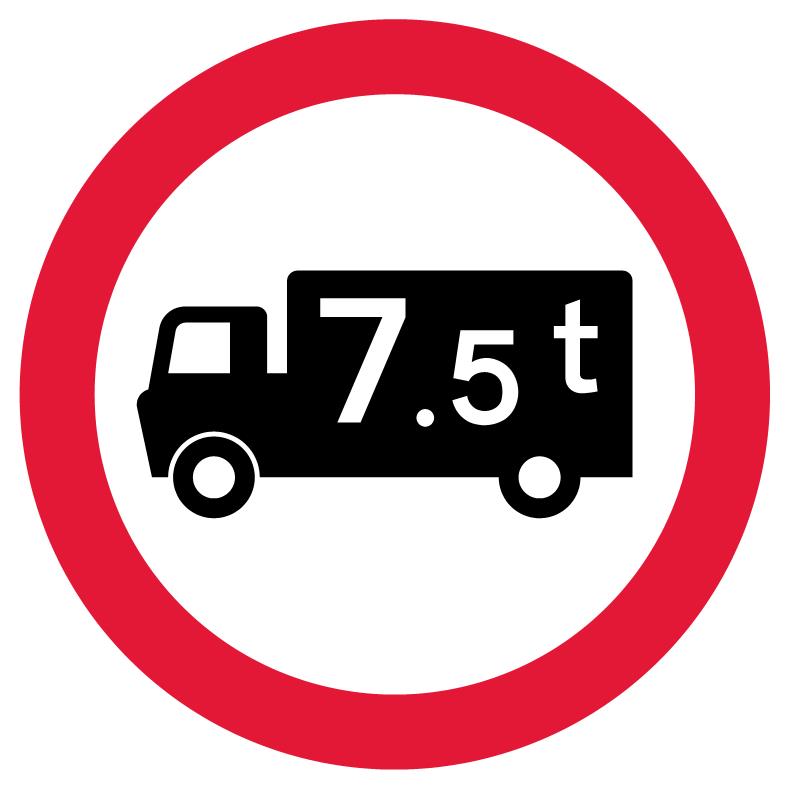 No goods vehicles over maximum gross weight
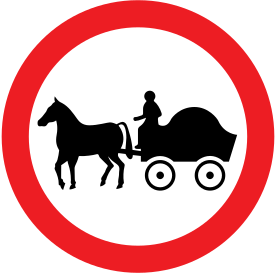 No horse-drawn vehicles
- No motor vehicles
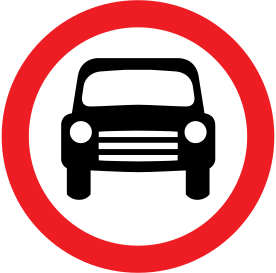 No motor vehicles except solo motorcycles
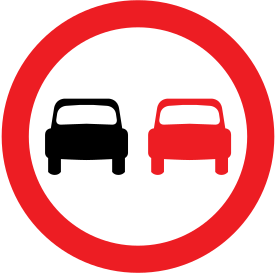 No overtaking
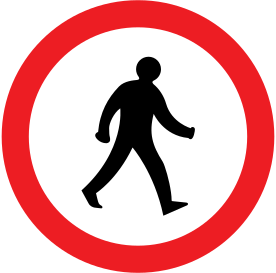 No pedestrians
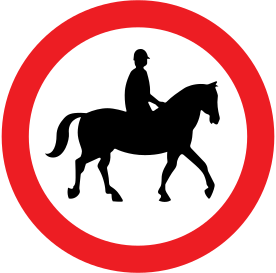 No ridden or accompanied horses
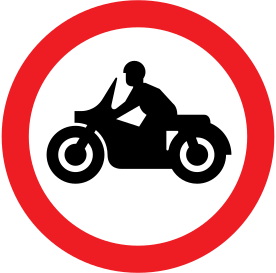 No solo motorcycles
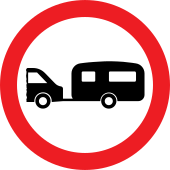 No towed caravans
 No vehicles
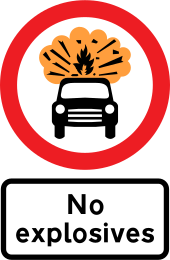 No vehicles carrying explosives
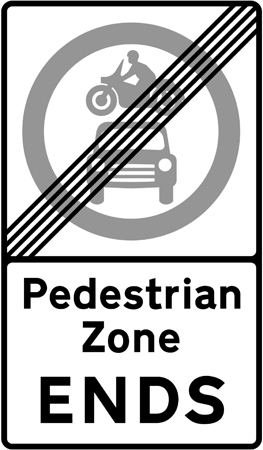 Pedestrian zone ends
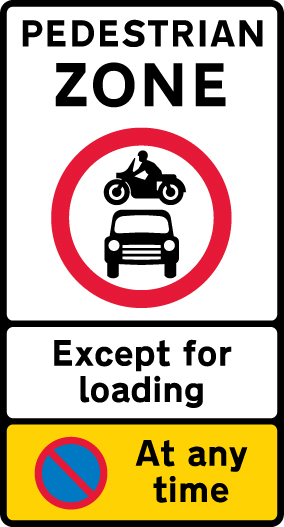 Pedestrian zone: no motor vehicles
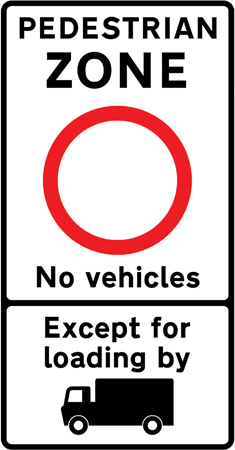 Pedestrian zone: no vehicles
Information signs (70)
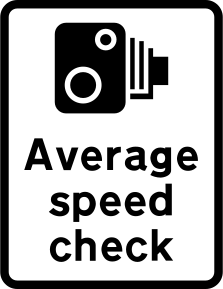 Average speed check
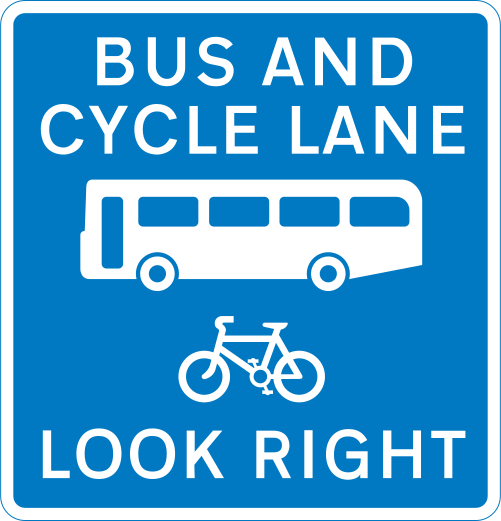 Bus and cycle lane: look right
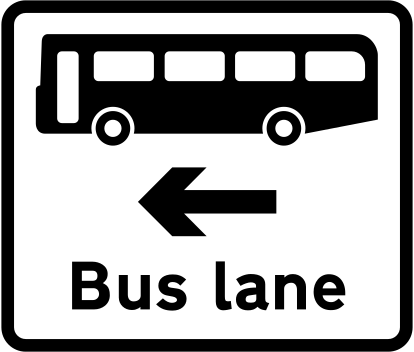 Bus lane at junction ahead
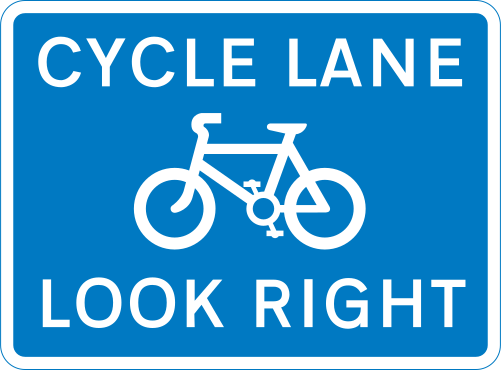 Cycle lane: look right
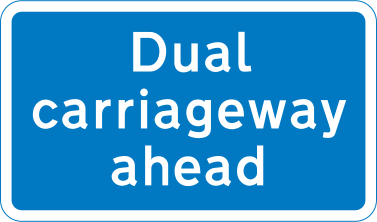 Dual carriageway ahead
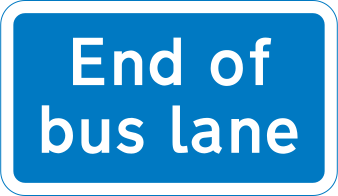 End of bus lane
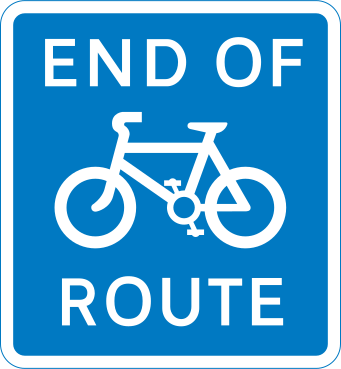 End of cycle route
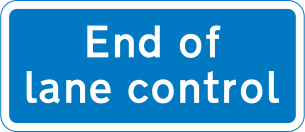 End of lane control
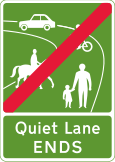 End of Quiet Lane
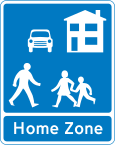 Home Zone
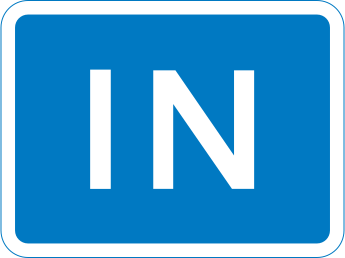 In (separate entrance)
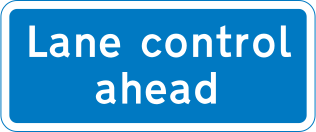 Lane control ahead
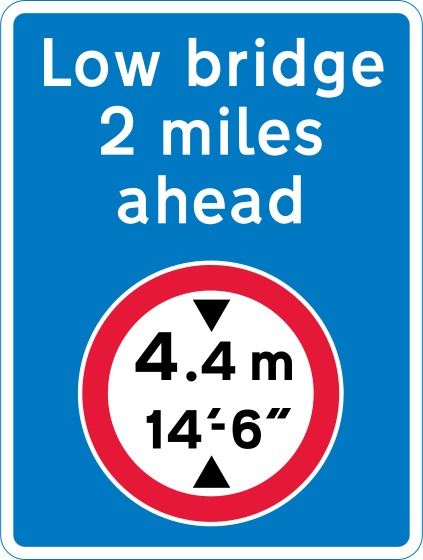 Low bridge ahead
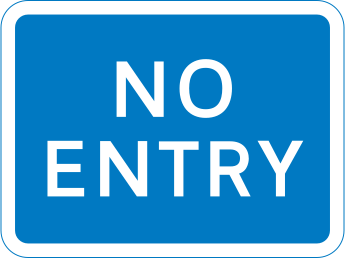 No entry (separate entrance)
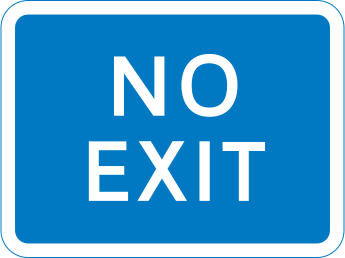 No exit (separate exit)
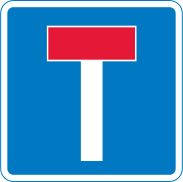 No through road
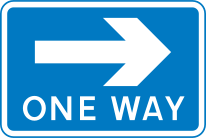 One way (pedestrian advice)
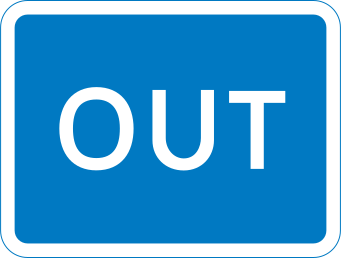 Out (separate exit)
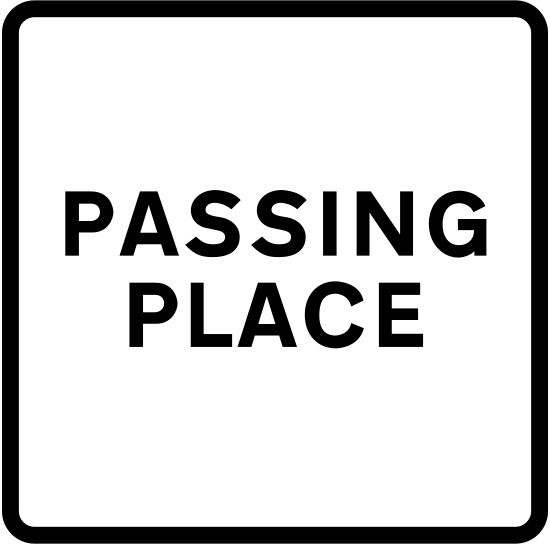 Passing place
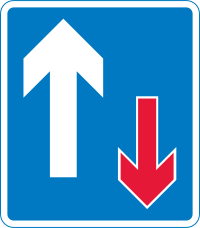 Priority over oncoming vehicles
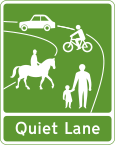 Quiet Lane
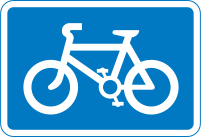 Recommended route for cycles
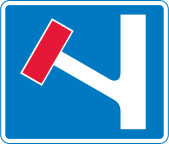 Road closed to through traffic
- Single track road with passing places
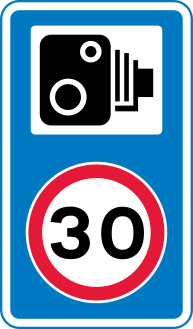 Speed camera nearby (30 mph)
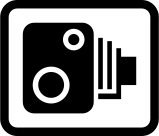 Speed camera reminder
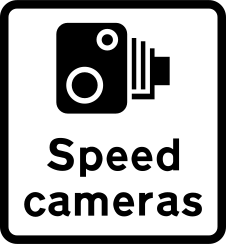 Speed cameras
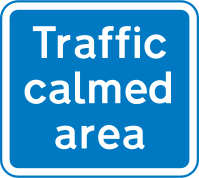 Traffic-calmed area
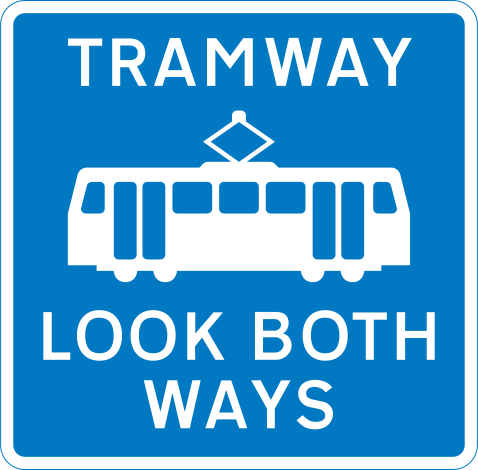 Tramway: look both ways
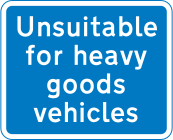 Unsuitable for heavy goods vehicles
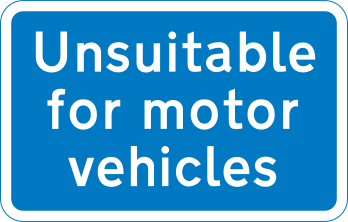 Unsuitable for motor vehicles
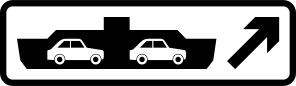 Car ferry
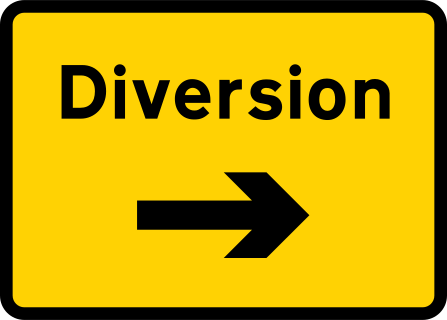 Diversion
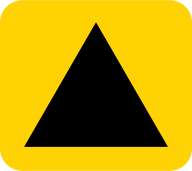 Emergency diversion route
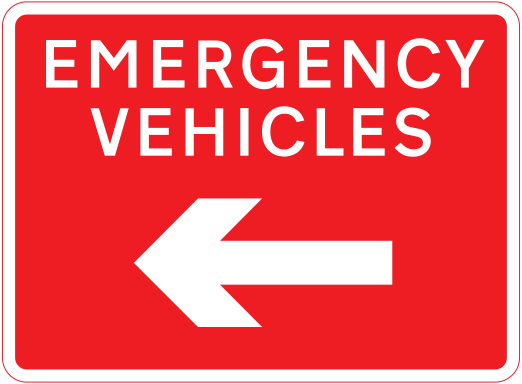 Emergency vehicles route
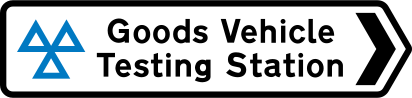 Goods vehicle testing station
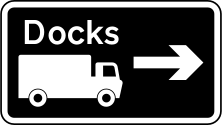 Lorry route
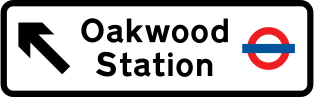 Non-primary route direction
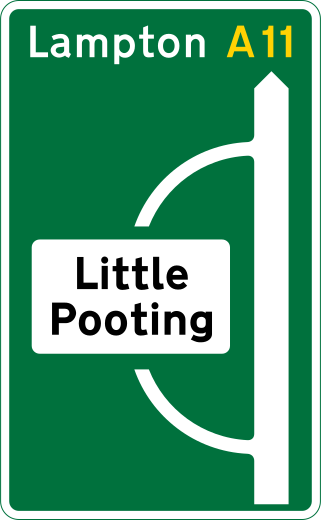 Primary route direction
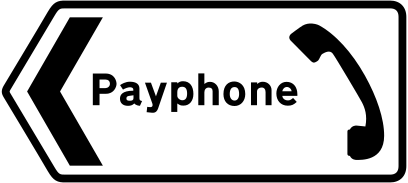 Public telephone
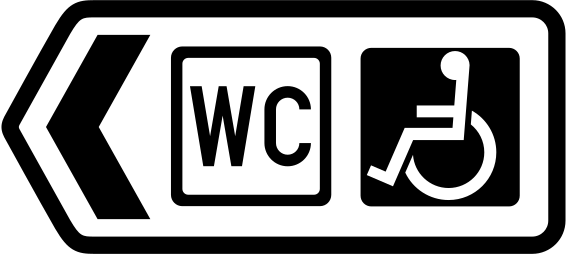 Public toilets with disabled access
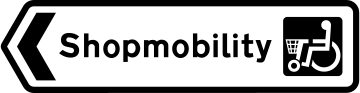 Shopmobility
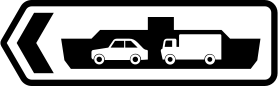 Vehicle ferry
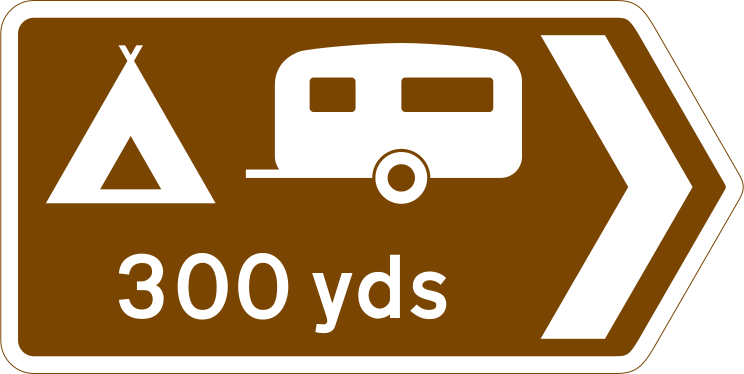 Camping and caravan site
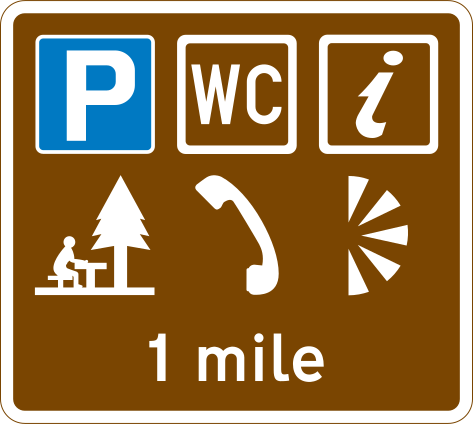 Parking with tourist facilities
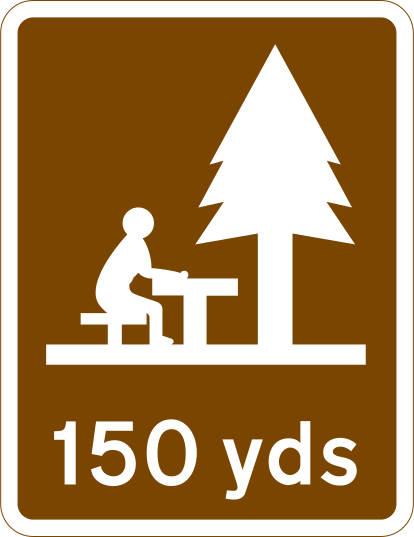 Picnic area
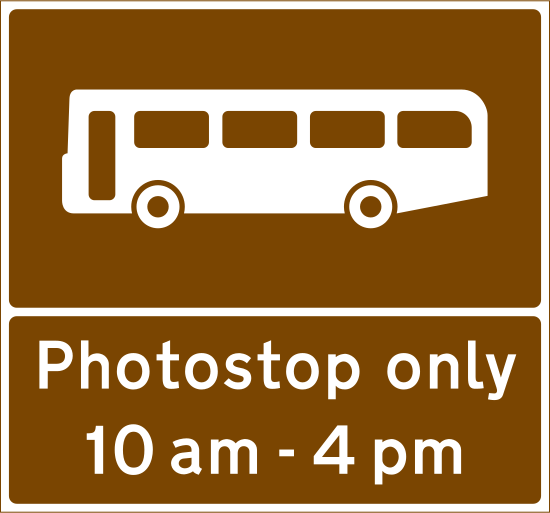 Tourist bus photo stop
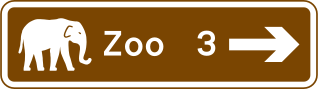 Tourist destination
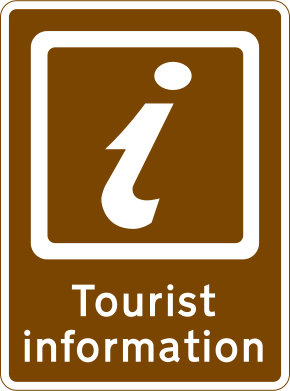 Tourist information
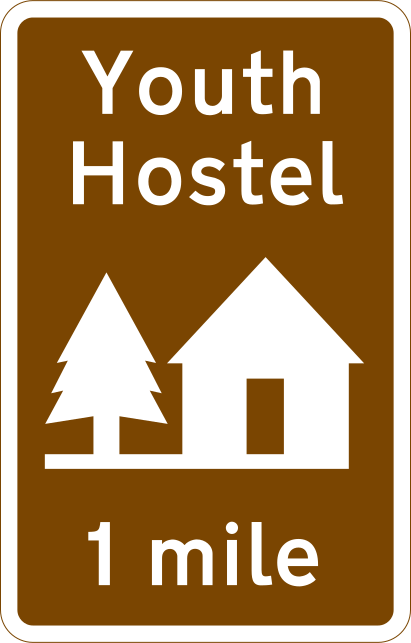 Youth hostel
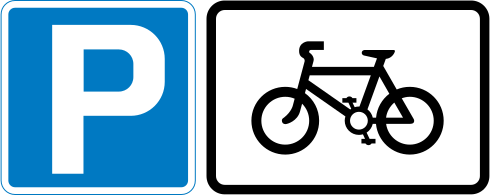 Cycle parking
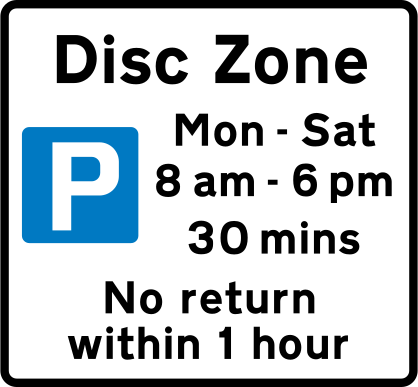 Disc zone
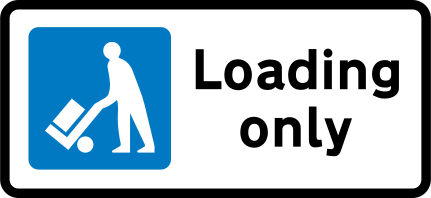 Loading only
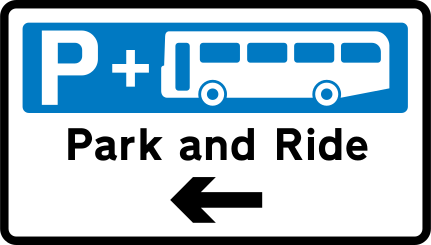 Park and Ride
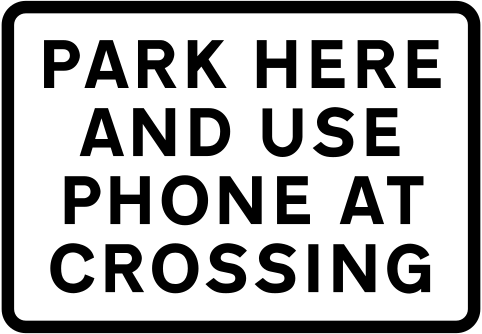 Park here and use phone
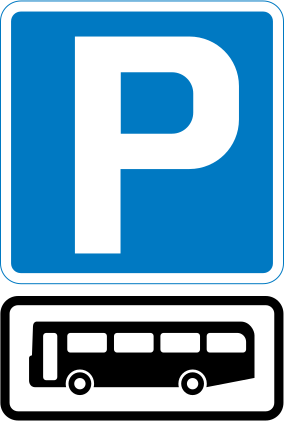 Parking for buses only
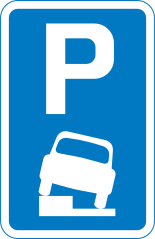 Parking partly on verge or footway
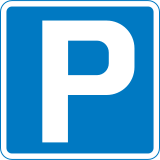 Parking place
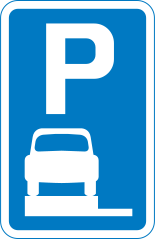 Parking wholly on verge or footway
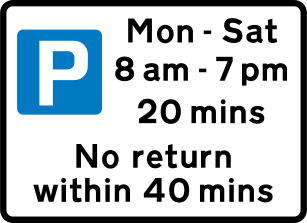 Parking with time limit
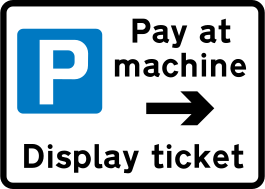 Pay and display parking
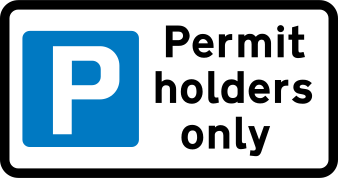 Permit holders only parking
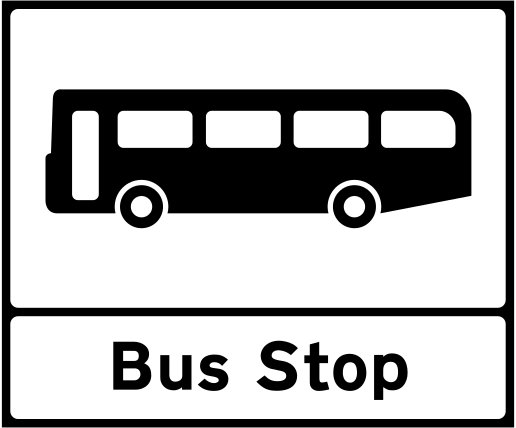 Bus stop
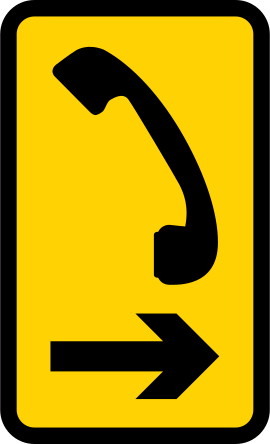 Direction to level crossing phone
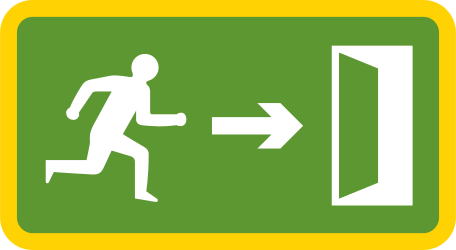 Emergency exit
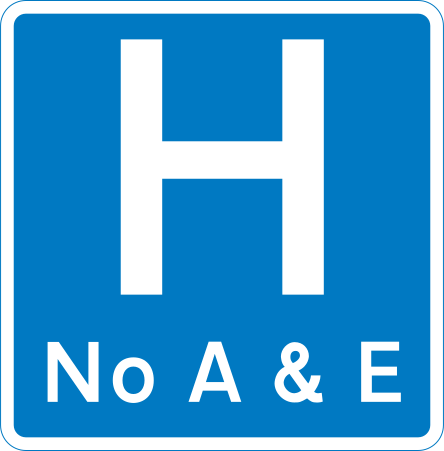 Hospital (no A&E)
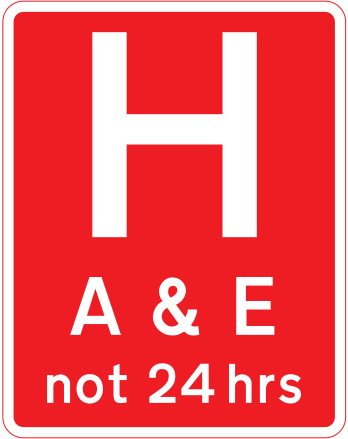 Hospital with A&E
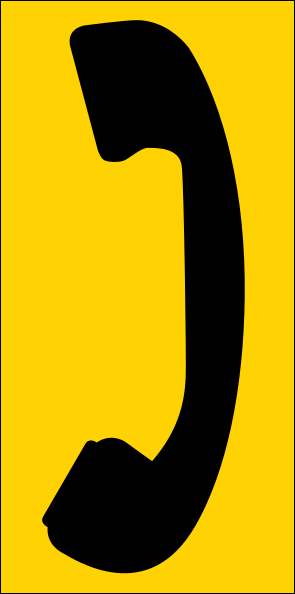 Level crossing phone
 Services
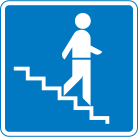 Stepped entrance to a subway
Motorway signs (16)
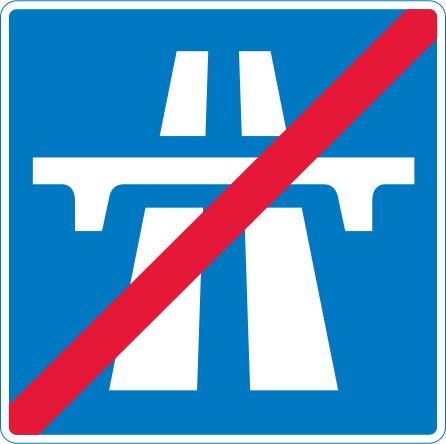 End of motorway
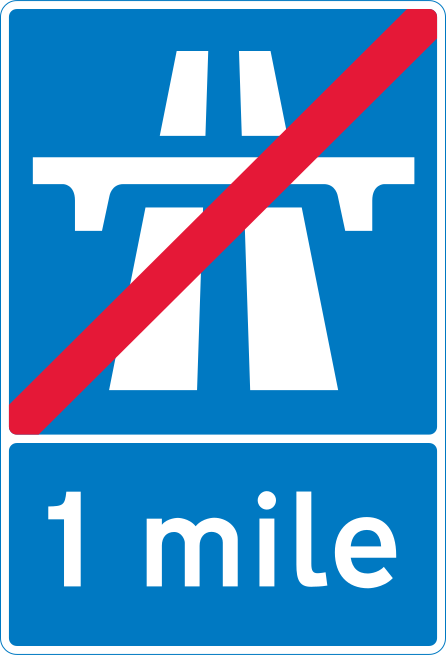 End of motorway in 1 mile
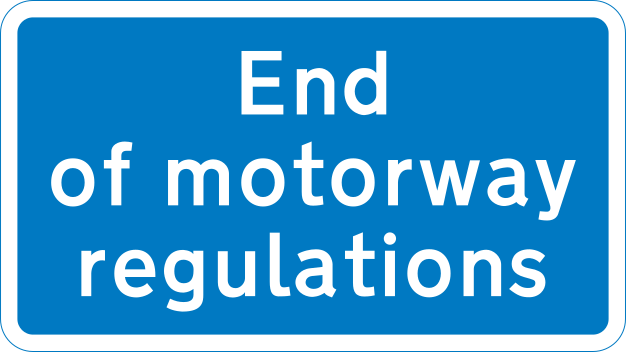 End of motorway regulations
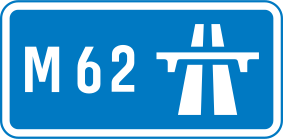 Start of motorway
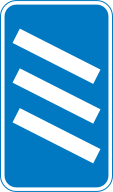 Countdown markers
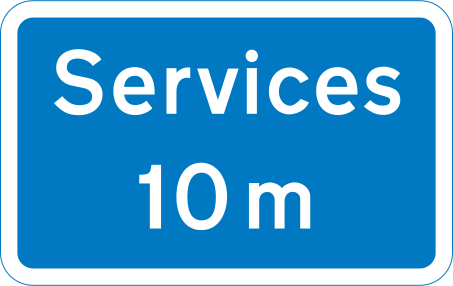 Distance to next services
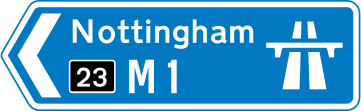 Motorway direction
 Motorway services entrance
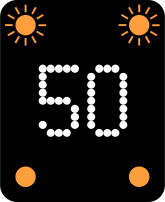 Advised speed (motorway signal)
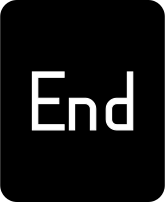 End of restrictions (motorway signal)
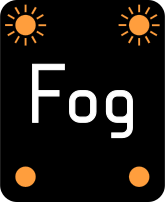 Fog warning (motorway signal)
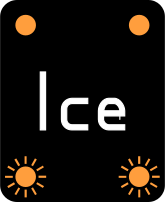 Ice signal
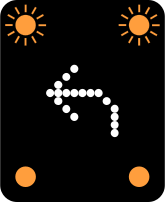 Move to adjacent lane (motorway signal)
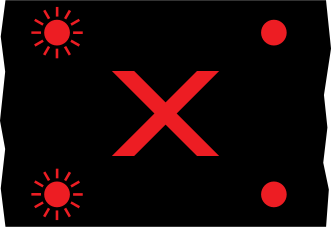 Red X: lane closed
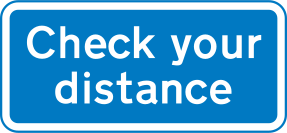 Check your distance
- Keep apart 2 chevrons
Temporary signs (40)
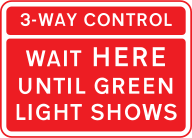 3-way signal control
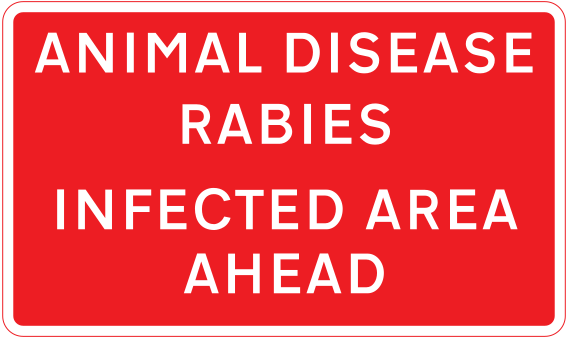 Animal disease infected area
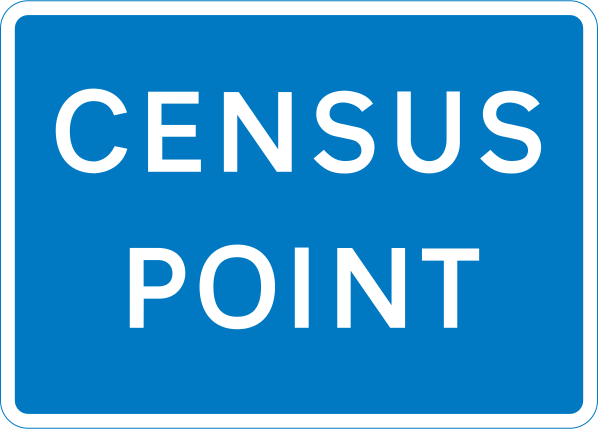 Census point
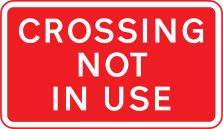 Crossing not in use
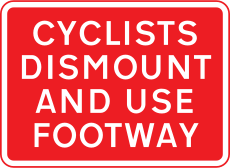 Cyclists dismount (road works)
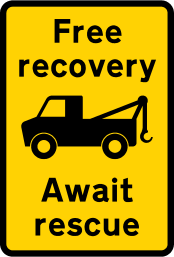 Free recovery: await rescue
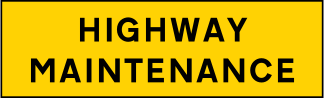 Highway maintenance
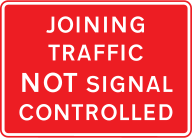 Joining traffic not signal controlled
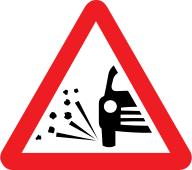 Loose chippings
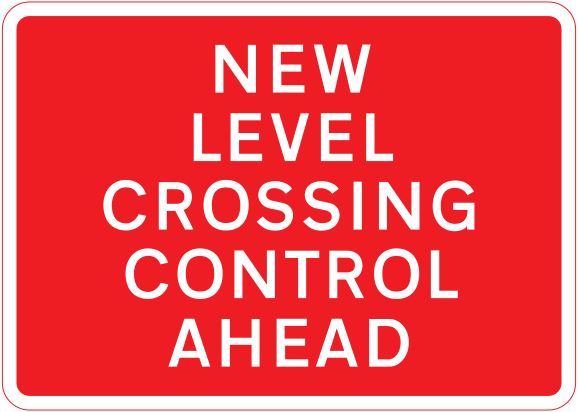 New level crossing control ahead
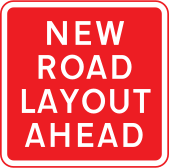 New road layout ahead
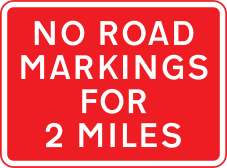 No road markings
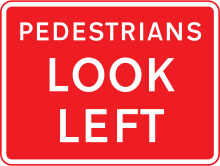 Pedestrians look left
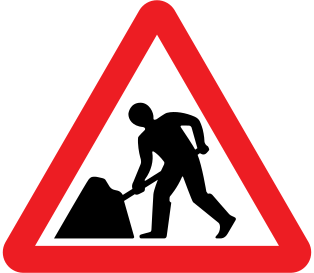 Road works
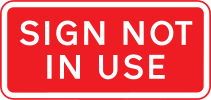 Sign not in use
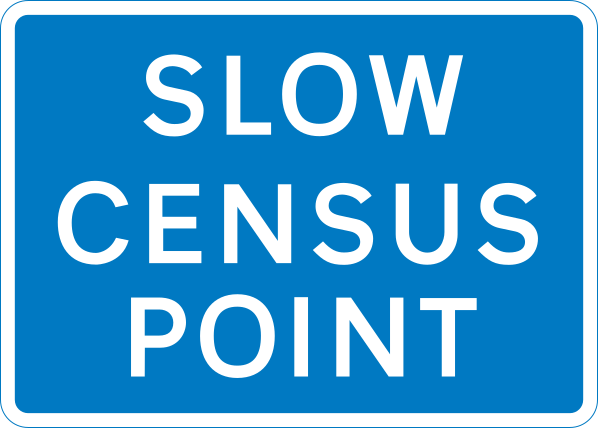 Slow census point
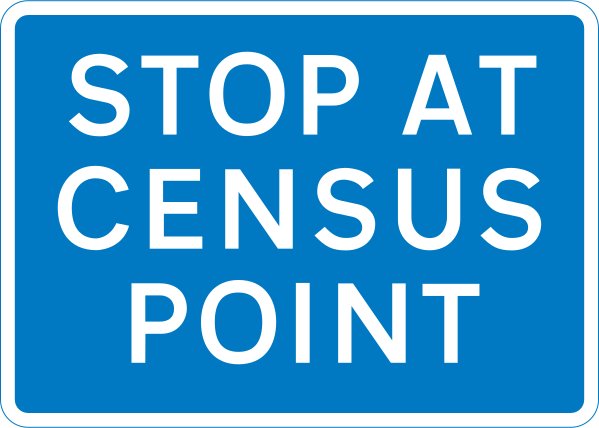 Stop at census point
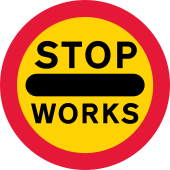 STOP WORKS
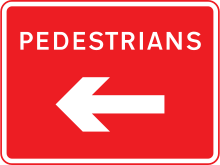 Temporary pedestrian route
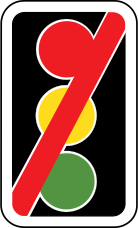 Traffic signals not in use
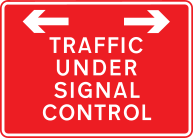 Traffic under signal control
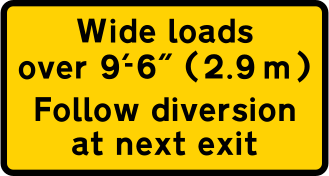 Wide loads: follow diversion
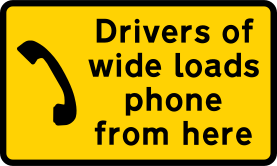 Wide loads: phone here
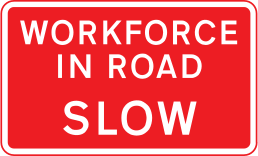 Workforce in road
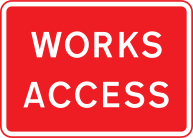 Works access
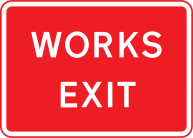 Works exit
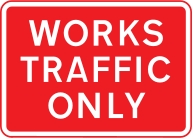 Works traffic only
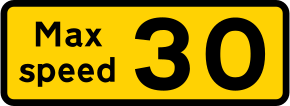 Maximum speed advised at road works
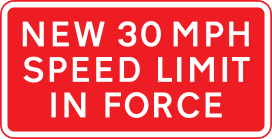 New 30 mph speed limit in force
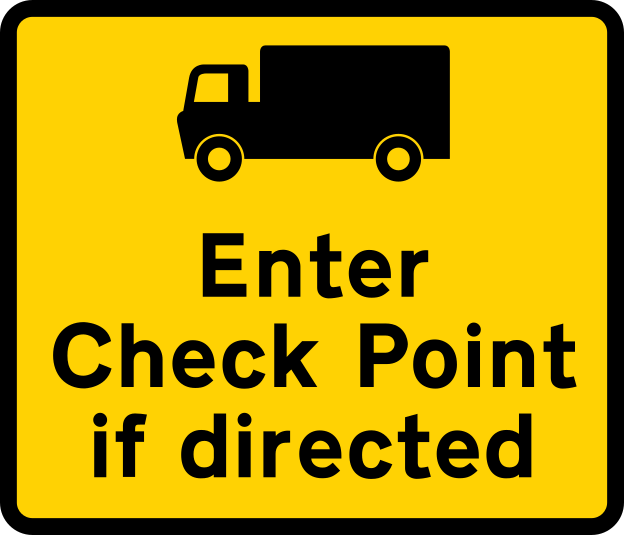 Enter check point if directed
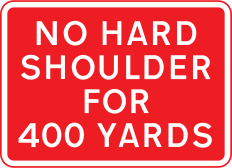 Hard shoulder closed
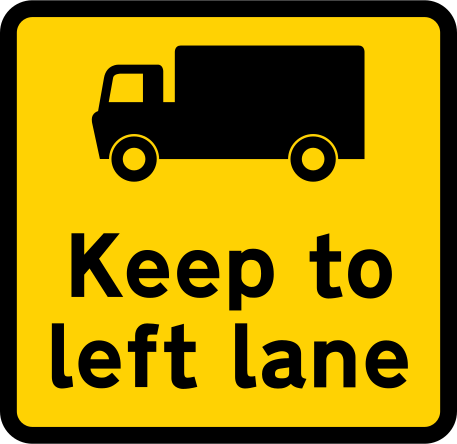 Keep to left lane (goods vehicles)
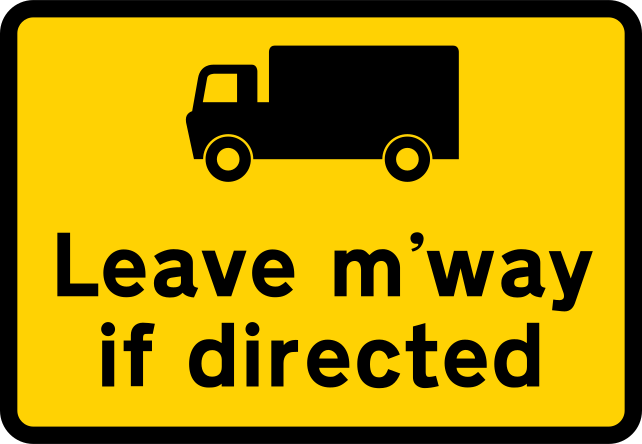 Leave motorway if directed
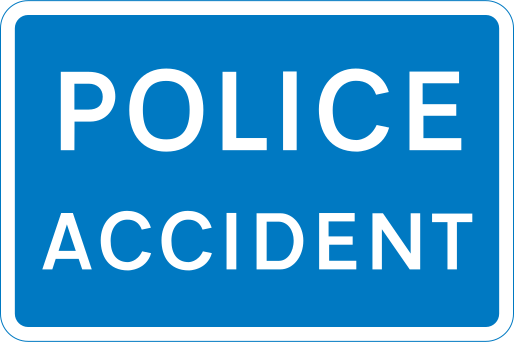 Police accident
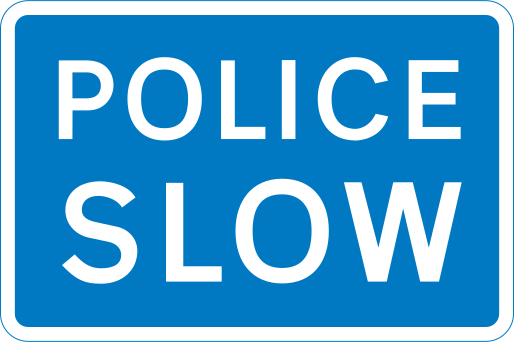 Police slow
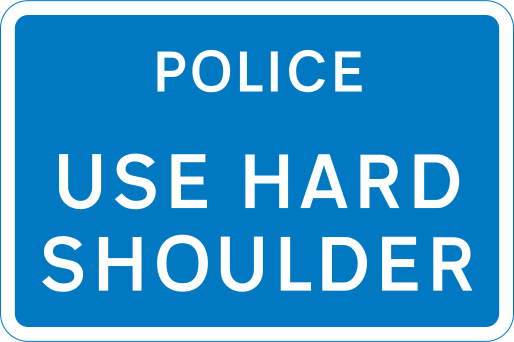 Police: use hard shoulder
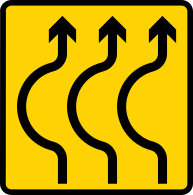 Sharp bends on temporary road
- Stop/Go board
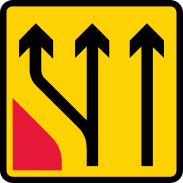 Temporary lane closure
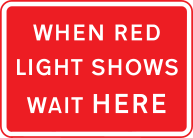 When red light shows wait here
UK road signs: common questions
How can I tell what a road sign means from its shape?
Triangles warn you about a hazard ahead. Circles give orders: a red ring says what you must not do, and a blue circle says what you must do. Rectangles give information or directions. Stop and Give way have their own shapes so they stand out.
What is the difference between a warning sign and a regulatory sign?
A warning sign tells you about something ahead, such as a bend or a crossing, so you can slow down and prepare. A regulatory sign gives an order, such as no entry or a speed limit, and you must obey it.
Which signs are easy to mix up?
No stopping and No waiting both use a red ring and a cross, but they ban different things. Stop and Give way both control a junction, but only Stop needs you to halt. Our guides compare each pair side by side.
Where do the sign pictures and rules come from?
The pictures are the Department for Transport's official sign images (Crown copyright). The meanings are checked against Know Your Traffic Signs and the Highway Code, and each rule on a sign page is cited to its source.
What is the best way to learn UK road signs?
Learn the shapes and colours first, then study one family at a time, and finish with a short quiz. Recalling an answer helps it stick far better than re-reading, so repeat the quiz until the confusing signs feel familiar.
Test what you know
Ten questions, no sign-up. Every answer comes with the reason, and a link to the full sign page.
Beyond signs
Road markings and traffic lights work together with signs. Learn them alongside each other, and read the guides that compare signs people confuse.