UK road sign guides
Practical guides that explain how signs work together and clear up the signs people most often mix up.
Each guide compares the signs side by side, with the rule behind each one.
Latest guides
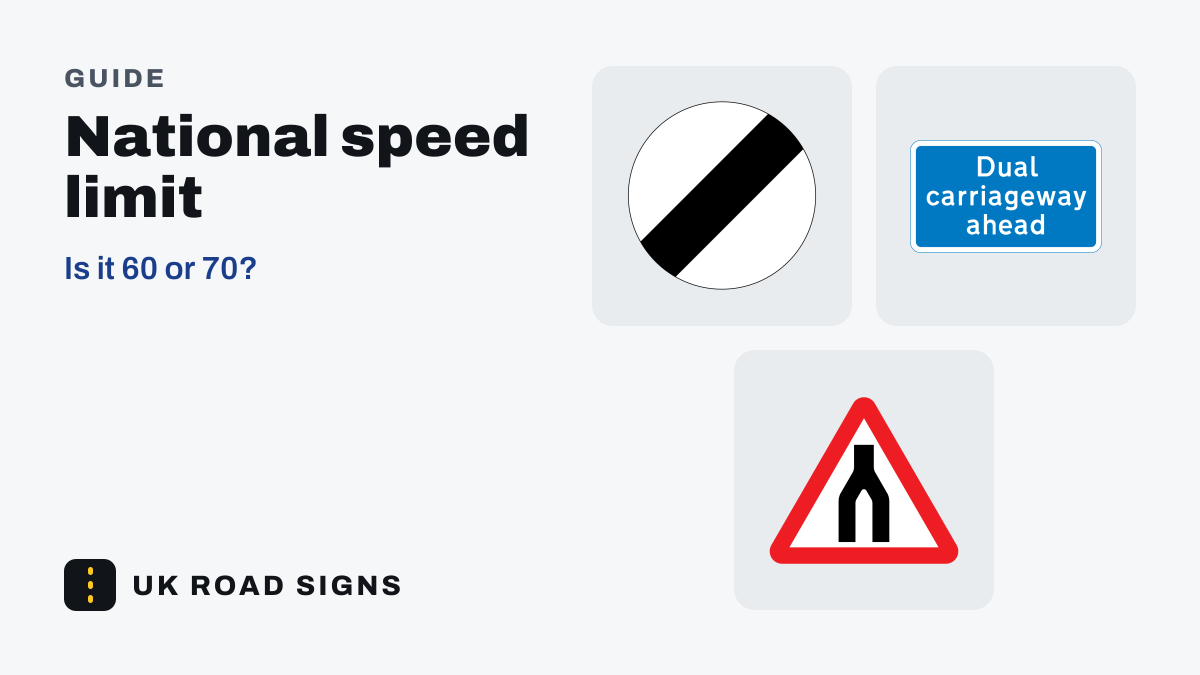
National speed limit: is it 60 or 70?
For cars, the national speed limit is 60 mph on a single carriageway and 70 mph on a dual carriageway. A central reservation, not the lane count, decides which.
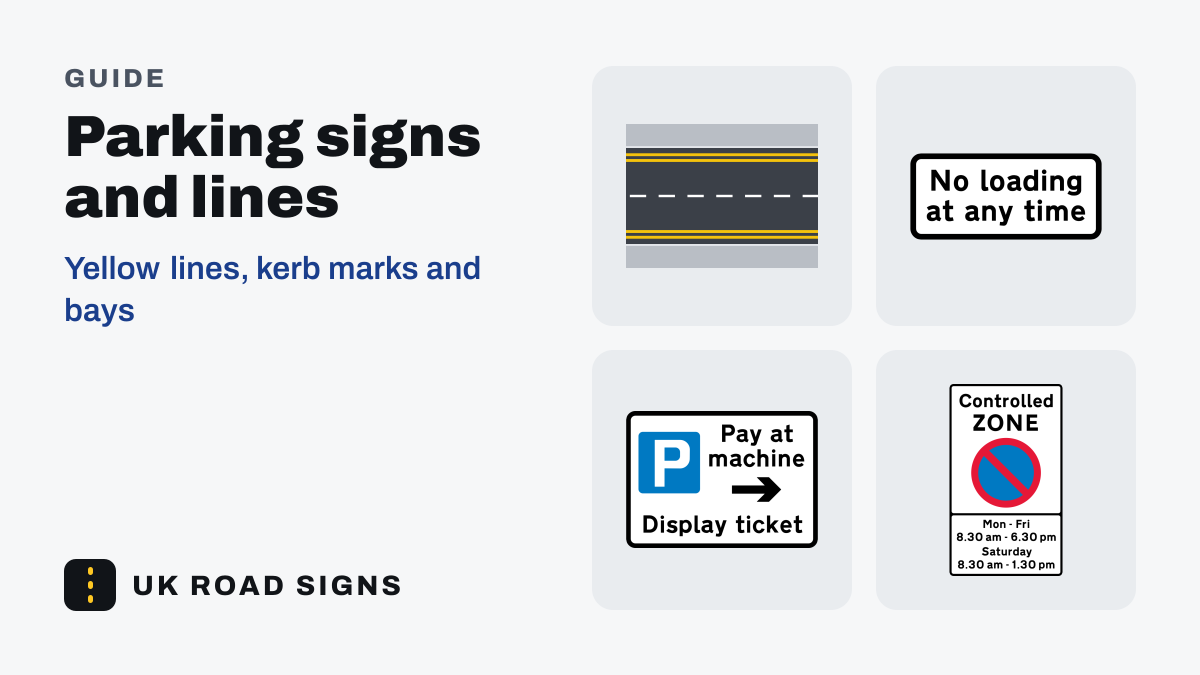
Parking signs and lines: yellow lines, kerb marks and bays
What UK parking lines and signs mean: yellow lines, kerb marks for loading, parking bays, controlled zones, pavement parking and Blue Badge rules.
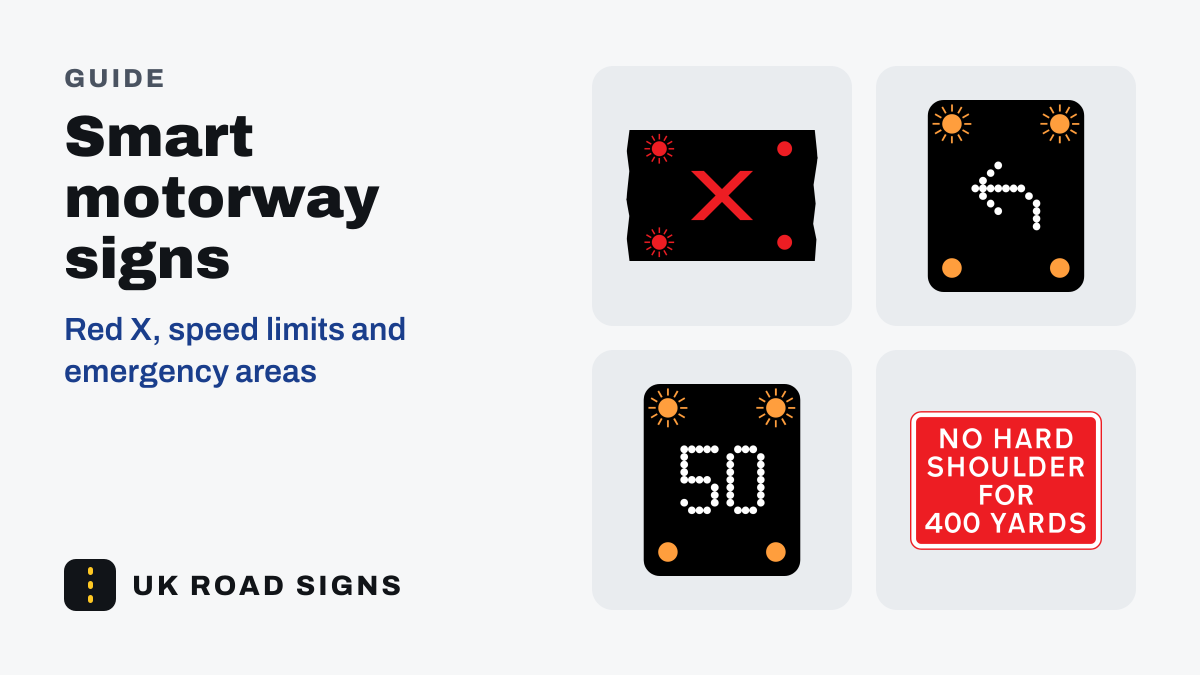
Smart motorway signs: red X, speed limits and emergency areas
What smart motorway signs mean: a red X closes a lane, a limit in a red circle is mandatory, and when you may use the hard shoulder or an emergency area.
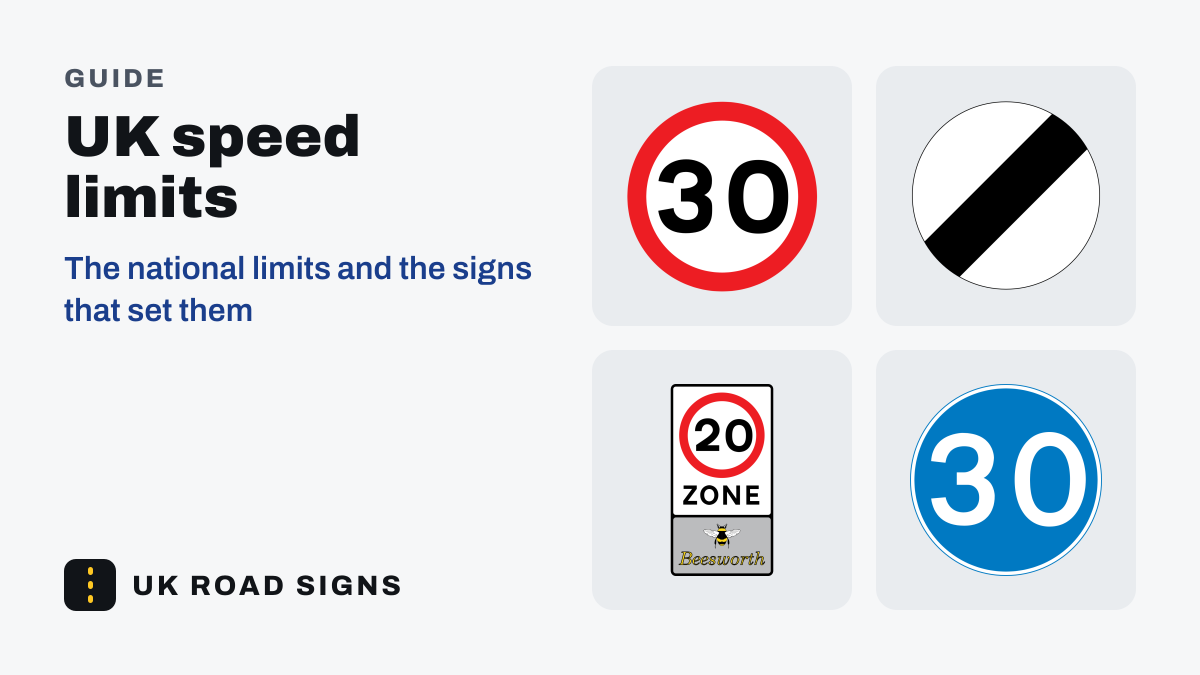
UK speed limits: the national limits and the signs that set them
UK speed limits by road and vehicle: 30 mph in built-up areas (20 mph in Wales), 60 mph on single carriageways and 70 mph on dual carriageways and motorways.
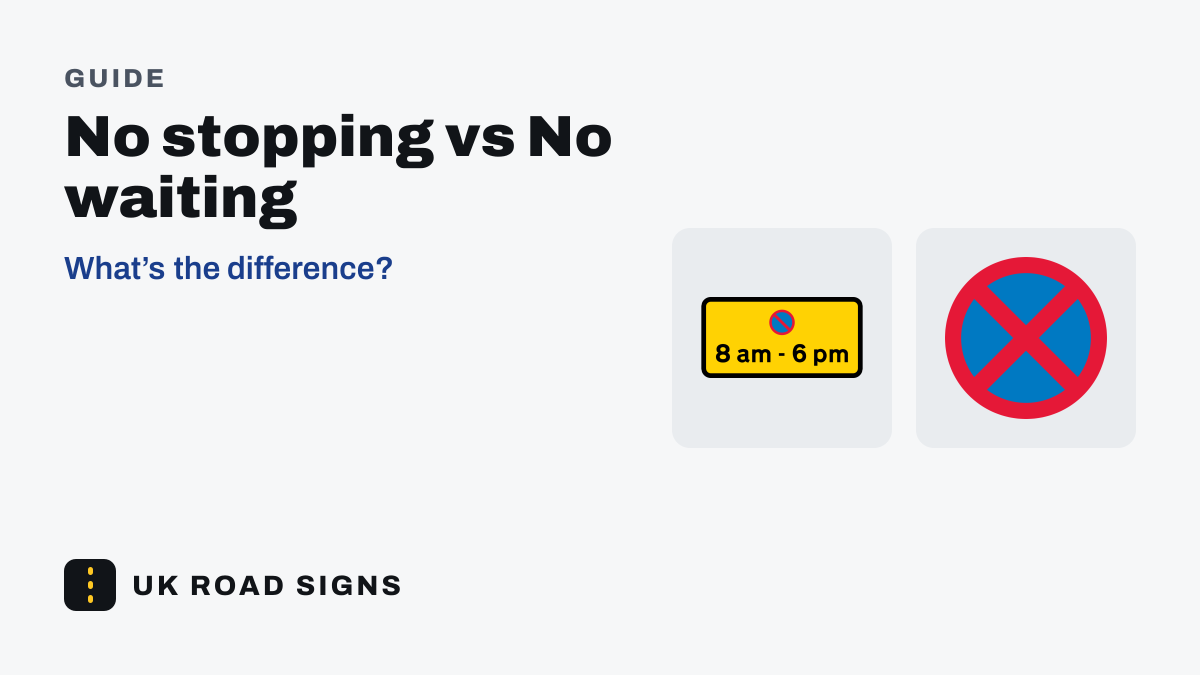
No stopping vs No waiting: what’s the difference?
No waiting lets you stop briefly to load or let passengers out. No stopping means you can’t stop at all. The signs, lines and rules explained.
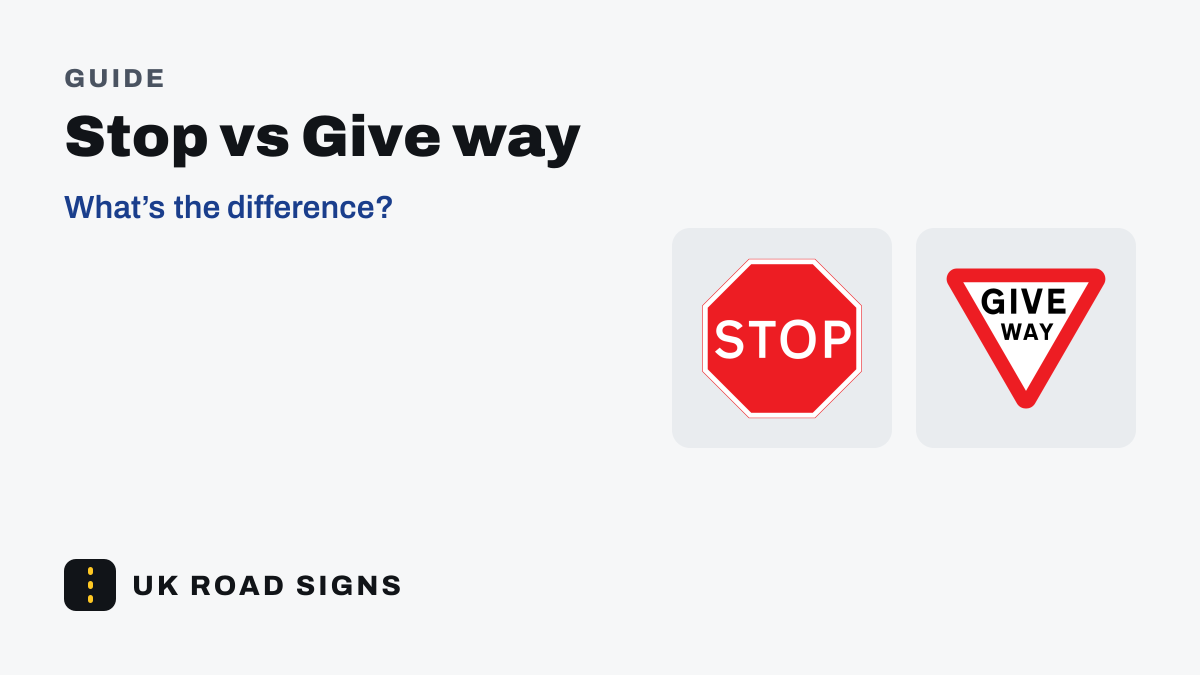
Stop vs Give way: what’s the difference?
At a Stop sign you must stop at the line every time. At Give way you stop only if you need to. How to tell them apart, and the rules for each.
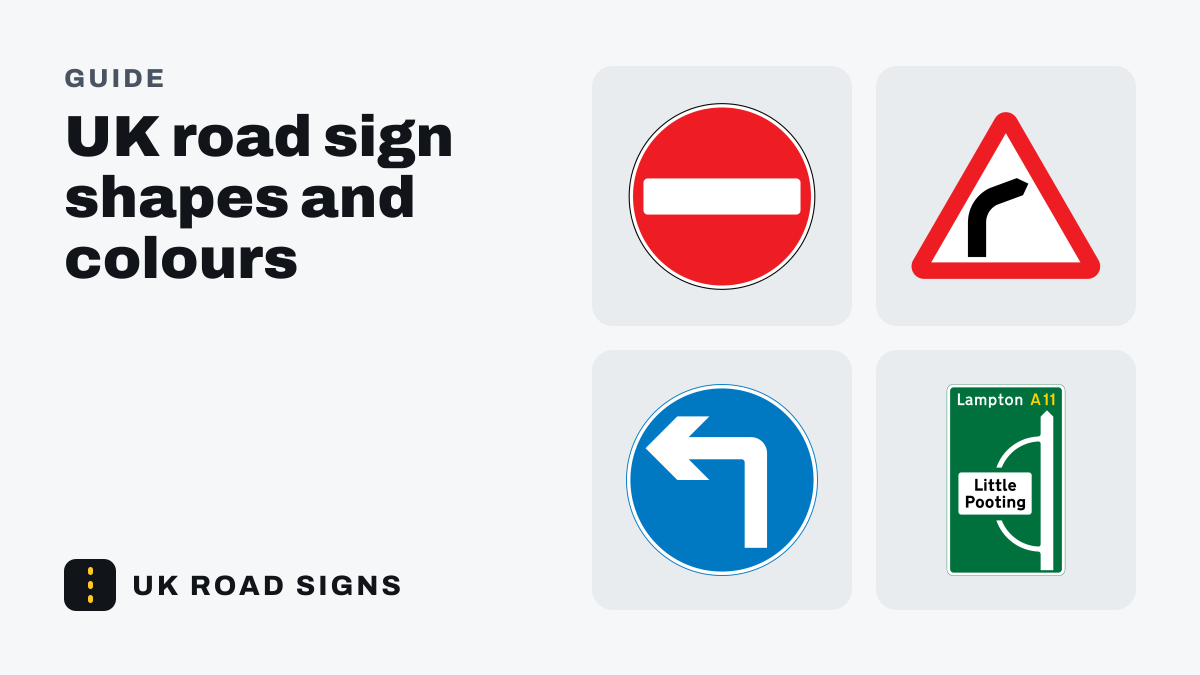
UK road sign shapes and colours
Circles give orders, triangles warn and rectangles inform. Learn what each UK road sign shape and colour tells you, with examples.
Start with the signs
Each category page explains how to recognise its signs at a glance, and what to do when you see one.