Stop vs Give way: what’s the difference?
Stop and Give way both tell you that traffic on the road you are joining has priority. The difference is whether you must always come to a complete stop.
The short version
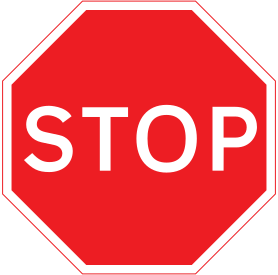
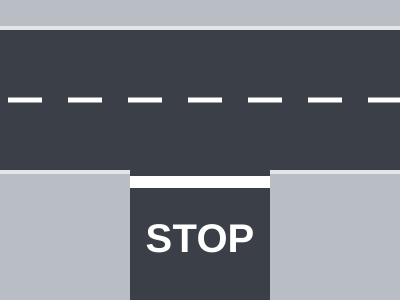
- Stop: you must stop behind the solid white line every time, even if the road is clear, then go when it is safe.
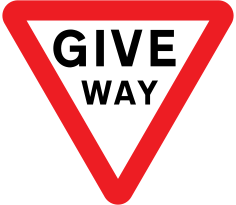
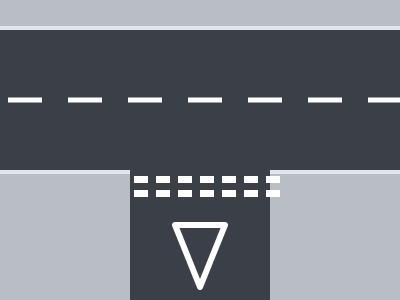
- Give way: you must let traffic on the main road go first, but you only need to stop if traffic is coming.
- The shapes are unique: Stop is a red octagon, and Give way is a triangle pointing down.
- The lines on the road match: one solid white line for Stop, double broken white lines for Give way.
At a glance
| Compare | Stop | Give way |
|---|---|---|
| Sign | Red octagon with the word STOP | Triangle pointing down with a red border |
| Must you stop? | Yes, every time | Only if you need to wait for a gap |
| Line across the road | One solid white line | Double broken white lines |
| Who has priority? | Traffic on the main road | Traffic on the main road |
The Highway Code, Rules 171 and 172
Stop: stop every time
Stop signs are used where you need to stop to see properly before you pull out. Even if the road looks clear as you approach, you must come to a complete stop at the line.
You must stop behind the line at a junction with a 'Stop' sign and a solid white line across the road. Wait for a safe gap in the traffic before you move off.
The Highway Code, Rule 171
At a Stop sign and road markings, you must stop before crossing the line on the road and make sure the way is clear before entering the major road.
Know Your Traffic Signs, p. 16
Give way: stop only if you need to
At Give way you must not make traffic on the main road slow down or change course. If the road is clear, you may go without stopping; if not, wait behind the lines.
You must give way to traffic on the main road when emerging from a junction with broken white lines across the road. The approach may have a 'Give Way' sign or a triangle marked on the road.
The Highway Code, Rule 172
The upright sign, or both the sign and the triangle on the road, might not be used at junctions where there is relatively little traffic.
Know Your Traffic Signs, p. 16
Other places you give way
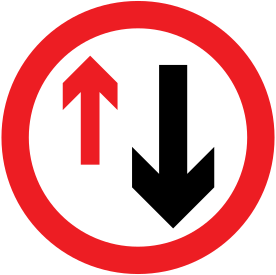
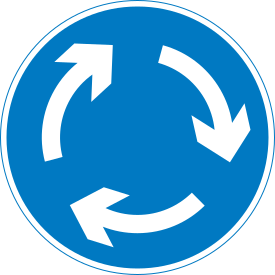
Give way rules also apply without a junction sign. On a narrow road, a sign may tell you to give way to traffic coming the other way, and at roundabouts you give way to traffic from your right.
Broken white lines are also used to show that you must give way to traffic from the right at a roundabout or mini-roundabout.
The Highway Code, Road markings
Test yourself
Check you can tell these signs apart with the Regulatory Signs Quiz: 10 questions, with an explanation after each answer.
Take the Regulatory Signs QuizSources
- The Highway Code, Rule 171
- The Highway Code, Rule 172
- Know Your Traffic Signs (Department for Transport, Sixth edition, 2023), Regulatory signs, p. 16
- The Highway Code, Road markings
Last reviewed 6 October 2026. This guide explains the rules in our own words; for the full rules, see The Highway Code. How we source and check content
More guides
UK road sign shapes and colours
Circles give orders, triangles warn and rectangles inform. Learn what each UK road sign shape and colour tells you, with examples.
No stopping vs No waiting: what’s the difference?
No waiting lets you stop briefly to load or let passengers out. No stopping means you can’t stop at all. The signs, lines and rules explained.