Regulatory sign
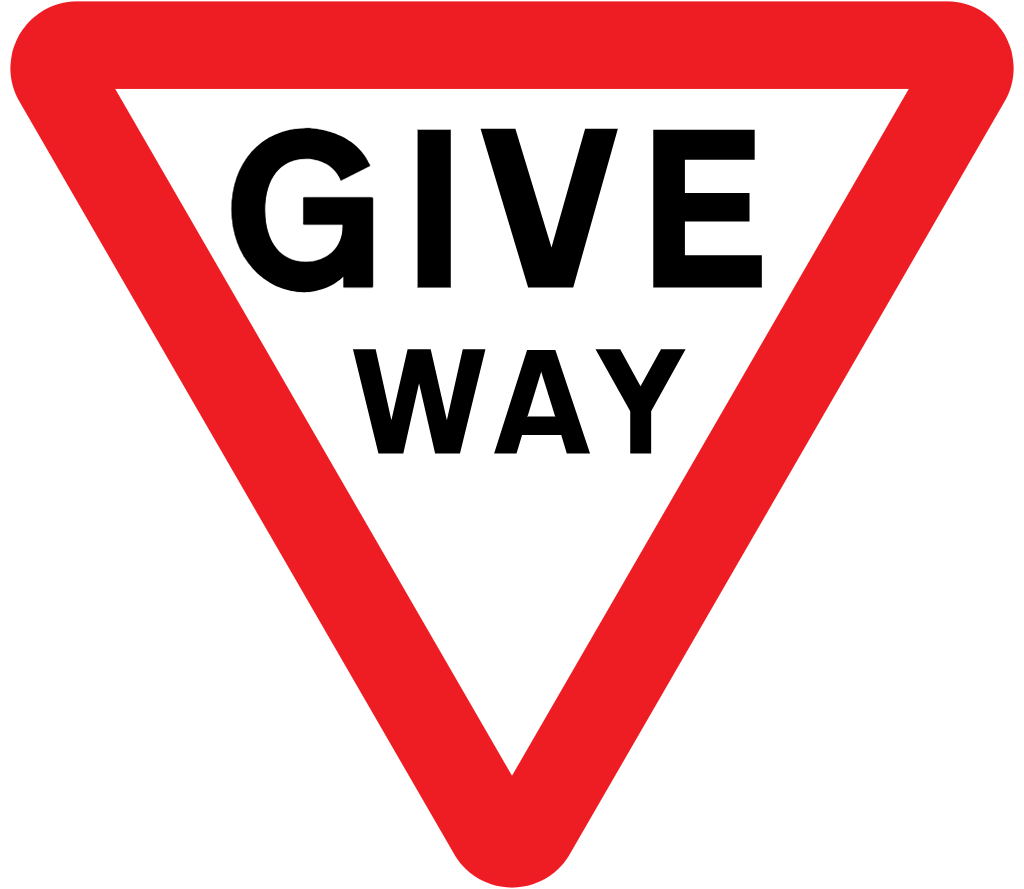
Give way sign
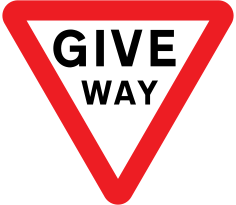
What does the Give way sign mean?
You must give way to traffic on the major road ahead. You only need to stop if you have to wait for a safe gap.
Also known as: Give way triangle, Upside-down triangle sign
What it means
At the junction ahead, traffic on the major road has priority. You must let it pass before you pull out, but you don't have to stop if the way is clear.
The upside-down triangle is one of a few exceptions to the usual shape rules, used to give this sign extra prominence. No other sign has this shape.
The sign goes with give way markings: broken white lines across the road, often with a triangle painted on the approach. The broken lines show where to wait. At quieter junctions, the upright sign, or both the sign and the painted triangle, might not be used, but the broken lines still mean you must give way.
What the symbol shows
Memory tip: The triangle points down, as if bowing to the traffic on the main road.
Where you'll see it
At junctions where a minor road joins a major road.
Rules to know
You must give way to traffic on the main road when emerging from a junction with broken white lines across the road.
The Highway Code, Rule 172
The upright sign, or both the sign and the triangle on the road, might not be used at junctions where there is relatively little traffic.
Know Your Traffic Signs, p. 16
In Wales, a bilingual version of the sign may be used.
Know Your Traffic Signs, p. 16
Spot the difference
Give way vs Stop
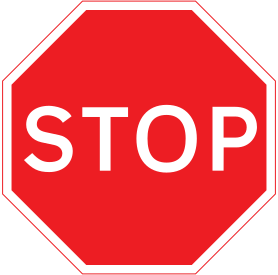
The key difference: At a Stop sign you must always stop at the line. At Give way you only stop if traffic on the main road means you have to wait.
| Give way | Stop | |
|---|---|---|
| Shape | Upside-down triangle | Red octagon |
| Line across the road | Broken white lines | Solid white line |
| Must you stop? | Only if you need to wait for traffic | Yes, every time |
The Highway Code, Rules 171 and 172
Common mistakes
Mistake: Thinking you must always stop at a give way line.
Instead: You must give way, which means stopping only if traffic on the major road makes it unsafe to go. It's the Stop sign that requires you to stop every time.
Mistake: Thinking there's no need to give way because there's no upright sign.
Instead: The broken white lines across the road mean you must give way, even without the sign.
Test yourself
Recalling the answer helps it stick. Pick an answer to see how you did.
Question 1 of 2
What does this sign mean?
Full road sign quizzes are coming soon. See what's planned
Download this sign
© Crown copyright. Free to reuse under the Open Government Licence v3.0, as long as the sign is reproduced accurately and not in a misleading context.
Related signs
Often confused with
Stop
Regulatory sign
At a Stop sign you must always stop at the line.
See also
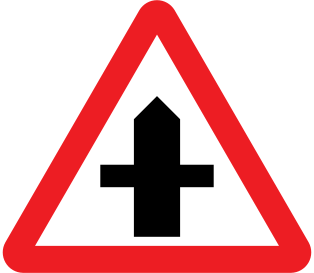
Crossroads
Warning sign
A warning that you are approaching a junction.
See also
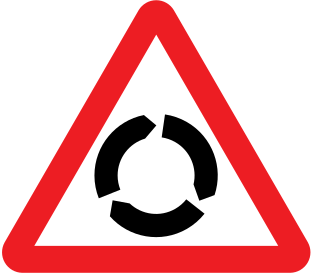
Roundabout
Warning sign
At roundabouts, give priority to traffic from your right.
More regulatory signs
All regulatory signs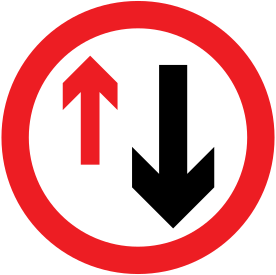
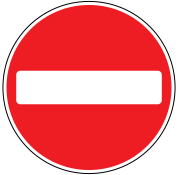
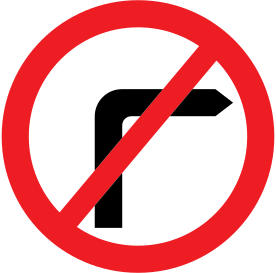
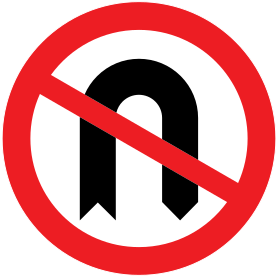
Sources
- Know Your Traffic Signs (Department for Transport, Sixth edition, 2023), Regulatory signs, p. 16
- The Highway Code, Rule 172
Sign image: Department for Transport, Traffic sign images (diagram 602). © Crown copyright, reused under the Open Government Licence v3.0.
Checked against these sources and reviewed by Bikash Thapa, full UK driving licence holder. Last reviewed 4 October 2026. This page explains the sign in our own words; for the full rules, see The Highway Code. How we source and check content