UK road sign shapes and colours
You can tell what kind of message a road sign gives before you can read it. The shape tells you whether it is an order, a warning or information, and the colour adds detail.
Learn these few rules and you can make sense of signs you have never seen before.
The short version
- Circles give orders: a red ring or red circle tells you what you must not do, and a blue circle tells you what you must do.
- Triangles warn of a hazard ahead. Warning triangles are red.
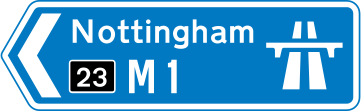
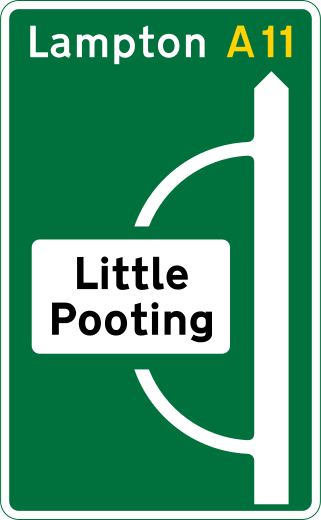
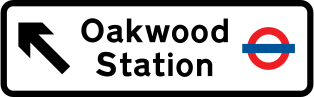
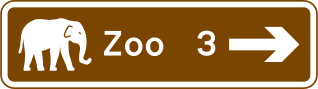
- Rectangles give information. Their colour shows the kind of route: blue for motorways, green for primary routes, white for other roads and brown for tourist destinations.
- Stop and Give way break the shape rules on purpose, so they stand out.
Circles give orders
Most signs that give orders are circles. Many of them are legal requirements, so these are the signs you most need to get right.
Look at the colour. A red ring or a red circle bans something. A blue circle with no red border tells you what you must do, such as turn left or keep left.
Most regulatory signs are circular. A red ring or red circle indicates a prohibition. A blue circle generally gives a positive (mandatory) instruction.
Know Your Traffic Signs, p. 16
Signs with red circles are mostly prohibitive, and plates below signs qualify their message. Signs with blue circles but no red border mostly give positive instruction.
The Highway Code, Traffic signs
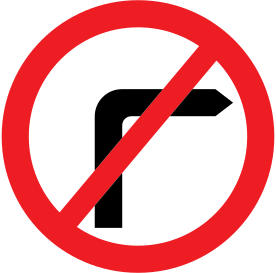
No right turn
Road sign
Red ring: you must not turn right
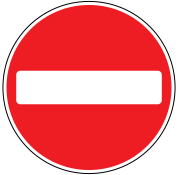
No entry
Road sign
Red circle: no entry
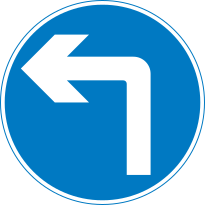
Turn left ahead
Road sign
Blue circle: you must turn left
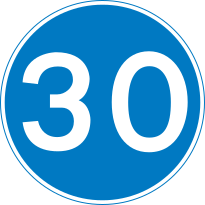
Minimum speed
Road sign
Blue circle: a minimum speed
Triangles warn
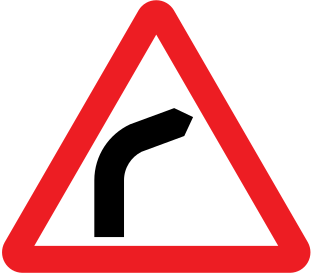
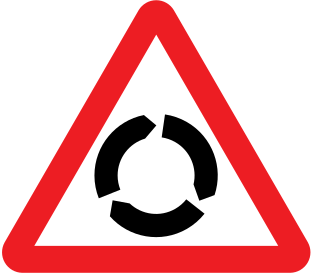
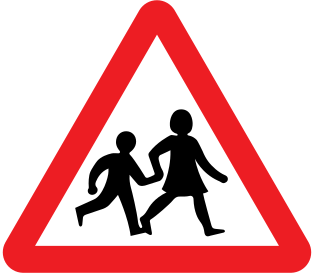
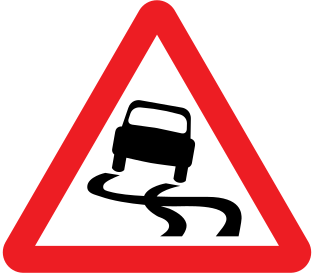
A triangle with a red border warns you of a hazard ahead, such as a bend, a junction or people crossing. It doesn’t tell you to do anything specific, but it gives you time to slow down and get ready.
Some warning signs have a plate underneath giving the distance to the hazard or how far it goes on.
Triangles warn. All triangular signs are red.
Know Your Traffic Signs, p. 9
Plates under warning signs can show the distance to the hazard, or the distance over which it extends.
Know Your Traffic Signs, p. 12
Rectangles inform
Rectangles give information and directions. On direction signs, the background colour tells you what kind of road the sign is on or leads to.
| Colour | Used for |
|---|---|
| Blue | Information signs, and direction signs on motorways |
| Green | Direction signs on primary routes (main A roads) |
| White | Direction signs on non-primary and local routes, and plates under other signs |
| Brown | Tourist destinations |
Know Your Traffic Signs, pp. 9, 118
Blue rectangles are used for information signs, except on motorways, where blue is used for direction signs. Green rectangles are direction signs on primary routes, and white rectangles are direction signs on non-primary routes, or plates used with warning and regulatory signs.
Know Your Traffic Signs, p. 9
Tourist destinations are shown on signs or panels with brown backgrounds.
Know Your Traffic Signs, p. 118
The exceptions: Stop and Give way
Two of the most important signs break the rules so that they stand out: Stop is an eight-sided octagon, and Give way is a triangle pointing downwards. No other signs use these shapes.
There are a few exceptions to the shape and colour rules, to give certain signs greater prominence. Examples are the STOP and GIVE WAY signs.
Know Your Traffic Signs, p. 9
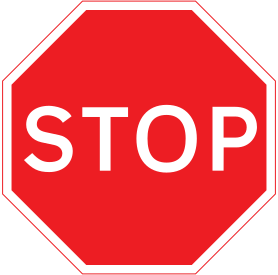
Stop
Road sign
Octagon: stop every time
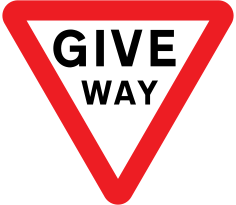
Give way
Road sign
Inverted triangle: give way
Test yourself
Check you can tell these signs apart with the UK Road Signs Quiz: 10 questions, with an explanation after each answer.
Take the UK Road Signs QuizSources
- Know Your Traffic Signs (Department for Transport, Sixth edition, 2023), The signing system, p. 9
- Know Your Traffic Signs (Department for Transport, Sixth edition, 2023), Regulatory signs, p. 16
- The Highway Code, Traffic signs
Last reviewed 6 October 2026. This guide explains the rules in our own words; for the full rules, see The Highway Code. How we source and check content
More guides
Stop vs Give way: what’s the difference?
At a Stop sign you must stop at the line every time. At Give way you stop only if you need to. How to tell them apart, and the rules for each.
No stopping vs No waiting: what’s the difference?
No waiting lets you stop briefly to load or let passengers out. No stopping means you can’t stop at all. The signs, lines and rules explained.