No stopping vs No waiting: what’s the difference?
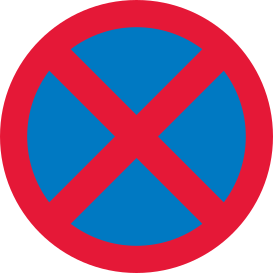
The No waiting and No stopping signs look alike: both are blue circles with a red border. One red diagonal line means no waiting; a red cross means no stopping, which is much stricter.
The short version
- No waiting (one red diagonal line): you must not wait, but you may stop briefly to let passengers in or out, and to load or unload unless that is also restricted.
- No stopping (a red cross): you must not stop at all, not even to drop someone off.
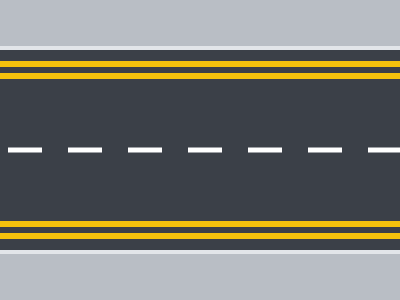
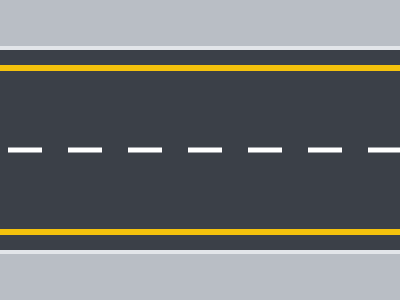
- Yellow lines along the kerb show waiting restrictions. On red routes, red lines show stopping restrictions.
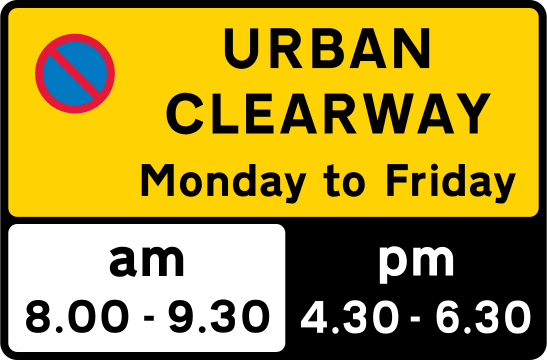
- Urban clearways ban stopping during set times, except to pick up or set down passengers.
At a glance
| Compare | No waiting | No stopping (24-hour clearway) |
|---|---|---|
| Symbol | Blue circle, red border, one red diagonal line | Blue circle, red border, red cross |
| Stop to let passengers in or out? | Yes | No |
| Stop to load or unload? | Yes, unless loading is also restricted | No |
| Lines on the road | Yellow lines along the kerb | None on a 24-hour clearway |
Know Your Traffic Signs, pp. 44, 64
No waiting: brief stops allowed
Waiting restrictions stop people parking where it would cause problems, but they still let you make a short stop.
Double yellow lines mean no waiting at any time. A single yellow line means no waiting during the times shown on a nearby plate.
You may stop to load or unload (unless there are also loading restrictions) or while passengers board or alight. Waiting restrictions apply to the carriageway, pavement and verge.
The Highway Code, Road markings
You must not wait or park on yellow lines during the times of operation shown on nearby time plates or zone entry signs.
The Highway Code, Rule 238
No stopping: clearways
A clearway keeps the main road free of stopped vehicles altogether. You will usually see 24-hour clearways on busy rural roads.
The red cross means no stopping, not even to pick up or set down passengers. On a 24-hour clearway, this applies to the main carriageway, slip roads and any acceleration and deceleration areas.
Know Your Traffic Signs, p. 64
You may stop in a lay-by on a 24-hour clearway unless signs say otherwise. A 24-hour clearway has no special road markings.
Know Your Traffic Signs, p. 64
You must not stop or park on a clearway.
The Highway Code, Rule 240
Urban clearways: no stopping at set times
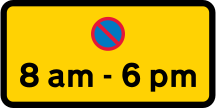
In towns, urban clearways keep main roads clear at busy times. They are a middle ground: no stopping during the times shown, but you may stop to pick up or set down passengers.
While an urban clearway is in operation, stopping is not allowed on the carriageway or verges, except to pick up or set down passengers.
Know Your Traffic Signs, p. 65
You must not stop or park on an urban clearway within its hours of operation, except to pick up or set down passengers.
The Highway Code, Rule 240
Red routes
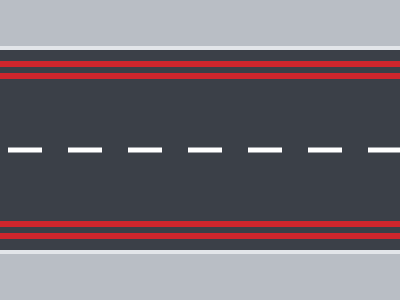
On red routes, mainly in London, red lines replace yellow ones and control stopping rather than waiting.
Double red lines always mean no stopping at any time. Stopping to park, load or unload, or to let passengers on or off is prohibited, except for licensed taxis and Blue Badge holders.
The Highway Code, Road markings
Single red lines mean no stopping during the days and times shown on the upright sign.
Know Your Traffic Signs, p. 66
Test yourself
Check you can tell these signs apart with the Regulatory Signs Quiz: 10 questions, with an explanation after each answer.
Take the Regulatory Signs QuizSources
- Know Your Traffic Signs (Department for Transport, Sixth edition, 2023), On-street parking control, pp. 44–66
- The Highway Code, Rule 238
- The Highway Code, Rule 240
- The Highway Code, Road markings
Last reviewed 6 October 2026. This guide explains the rules in our own words; for the full rules, see The Highway Code. How we source and check content
More guides
UK road sign shapes and colours
Circles give orders, triangles warn and rectangles inform. Learn what each UK road sign shape and colour tells you, with examples.
Stop vs Give way: what’s the difference?
At a Stop sign you must stop at the line every time. At Give way you stop only if you need to. How to tell them apart, and the rules for each.