Road marking
Double red lines
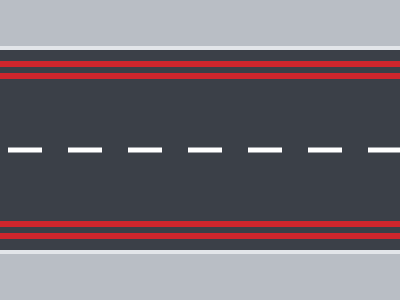
What do double red lines mean?
On a red route, double red lines mean no stopping at any time, not even to drop someone off or to load.
Also known as: Red route lines
What it means
Stopping for any reason is not allowed at any time, except for licensed taxis and, to pick up or set down a disabled person, Blue Badge holders.
Red lines are used on red routes, mainly in London and some other cities, to keep traffic moving. They are stricter than yellow lines: you may not stop even briefly.
Single red lines mean no stopping during the times shown on nearby signs. Specially marked boxes show where and when you may stop.
Where you'll see it
On red routes: major roads, mainly in London, marked with red lines instead of yellow.
Rules to know
The double red line always means no stopping at any time. Stopping to park, load or unload, or to let passengers on or off is prohibited, except for a licensed taxi or a Blue Badge holder.
The Highway Code, Road markings
Double red lines mean no stopping at any time; upright signs might not be provided. Single red lines mean no stopping during the days and times shown.
Know Your Traffic Signs, p. 66
The prohibition applies to the whole road, including the verge and footway.
Know Your Traffic Signs, p. 66
Common mistakes
Mistake: Stopping briefly to let a passenger out.
Instead: On double red lines you must not stop at all, not even for a moment. Find a marked box or another road.
Test yourself
Recalling the answer helps it stick. Pick an answer to see how you did.
Question 1 of 1
What does this marking mean?
Ready for more? Take the Road Markings Quiz
Related markings and signs
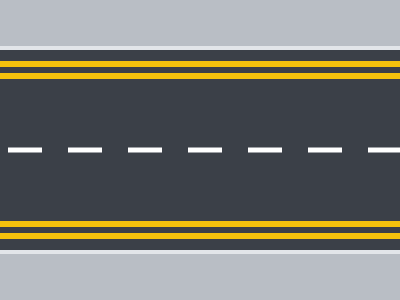
Similar
Double yellow lines
Road marking
Yellow lines: no waiting, but brief stops allowed.
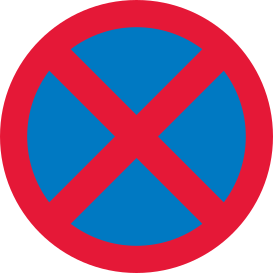
Similar
No stopping (clearway)
Road sign
A clearway: no stopping on the main carriageway.
More road markings
All road markings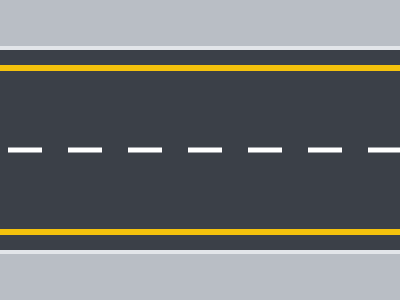
Sources
- The Highway Code, Road markings
- Know Your Traffic Signs (Department for Transport, Sixth edition, 2023), Red routes, p. 66
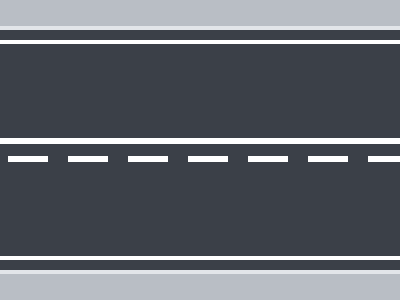
The diagram is our own illustration of the marking, not to scale. Official drawings are in Know Your Traffic Signs and the Highway Code.
Last reviewed 6 October 2026. This page explains the marking in our own words; for the full rules, see The Highway Code. How we source and check content