Road marking
Give way lines
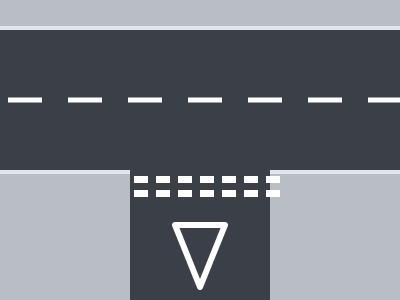
What do give way lines mean?
Give way to traffic on the main road. You only need to stop if traffic is coming, but you must not pull out in front of it.
Also known as: Broken white lines across the road
What it means
Traffic on the main road has priority. Wait behind the lines until there is a safe gap.
The double broken lines mark where to wait. A white triangle on the road before them, and often a Give way sign, warn you of the junction.
Unlike a stop line, you do not have to stop if the road is clear, but you must be ready to.
Where you'll see it
Across the end of side roads where they join a main road, and at roundabouts.
Rules to know
You must give way to traffic on the main road when emerging from a junction with broken white lines across the road.
The Highway Code, Rule 172
The approach to the junction may have a Give way sign or a triangle marked on the road.
The Highway Code, Rule 172
Broken white lines across the road mean give way to traffic on the major road, and can also be used at mini-roundabouts.
The Highway Code, Road markings
Common mistakes
Mistake: Rolling over the lines to get a better view.
Instead: Wait behind the lines and edge forward only if you need to see, giving way to traffic on the main road.
Test yourself
Recalling the answer helps it stick. Pick an answer to see how you did.
Question 1 of 2
What does this marking mean?
Ready for more? Take the Road Markings Quiz
Related markings and signs
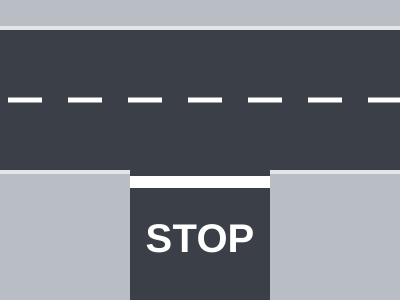
Often confused with
Stop line
Road marking
A single solid line: you must stop every time.
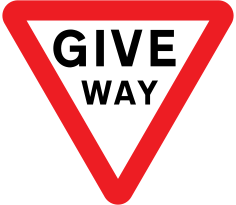
Used with
Give way
Road sign
The upright sign used with these lines.
More road markings
All road markings
Sources
- The Highway Code, Road markings
- The Highway Code, Rule 172
The diagram is our own illustration of the marking, not to scale. Official drawings are in Know Your Traffic Signs and the Highway Code.
Last reviewed 6 October 2026. This page explains the marking in our own words; for the full rules, see The Highway Code. How we source and check content