Road marking
Stop line
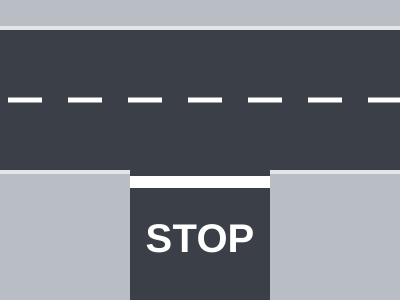
What does a stop line mean?
At a Stop sign you must stop behind the solid white line every time, even if the road is clear, then go when safe.
Also known as: Solid white line at a junction
What it means
You must come to a complete stop behind the line before you go on.
A stop line is a single, solid white line across the road. At a junction it goes with a Stop sign, and the word STOP is often painted on the road too.
Stop lines are also used at traffic lights and level crossings, where you must stop behind them when the lights tell you to.
Where you'll see it
At junctions with a Stop sign where visibility is poor, at traffic lights and at level crossings.
Rules to know
You must stop behind the line at a junction with a 'Stop' sign and a solid white line across the road. Wait for a safe gap in the traffic before you move off.
The Highway Code, Rule 171
You must stop behind the white 'Stop' line across your side of the road at traffic lights unless the light is green.
The Highway Code, Rule 175
Common mistakes
Mistake: Slowing down and rolling across when the road looks clear.
Instead: You must come to a complete stop behind the line every time.
Test yourself
Recalling the answer helps it stick. Pick an answer to see how you did.
Question 1 of 2
What does this marking mean?
Ready for more? Take the Road Markings Quiz
Related markings and signs
Often confused with
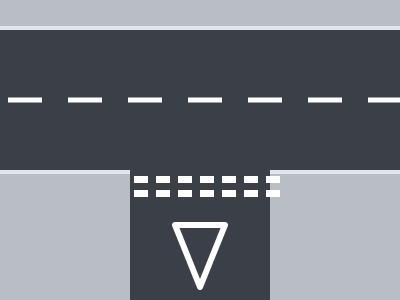
Give way lines
Road marking
Double broken lines: give way, but stop only if you need to.
Used with
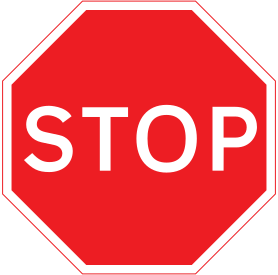
Stop
Road sign
The Stop sign used with this line.
More road markings
All road markings
Sources
- The Highway Code, Road markings
- The Highway Code, Rule 171
- The Highway Code, Rule 175
The diagram is our own illustration of the marking, not to scale. Official drawings are in Know Your Traffic Signs and the Highway Code.
Last reviewed 6 October 2026. This page explains the marking in our own words; for the full rules, see The Highway Code. How we source and check content