Regulatory signs
Regulatory signs give orders. They tell you what you must do, what you must not do, and who has priority. Many of them are legal requirements.
Most are circles. A red ring usually means something is not allowed, and a blue circle usually tells you what you must do. Stop and Give way have their own distinctive shapes, which give them extra prominence.
Usually a circle: red ring prohibits, blue circle instructs
Type its name or what it shows, or pick the shape and colour you saw.
What to do when you see a regulatory sign
- 1
Obey it: signs that give orders are legal requirements.
- 2
Read any plate underneath. It can limit the order to certain times, or exempt some vehicles, such as 'except for access'.
- 3
Remember the code: a red ring says what you must not do, a blue circle says what you must do.
Most looked-up regulatory signs
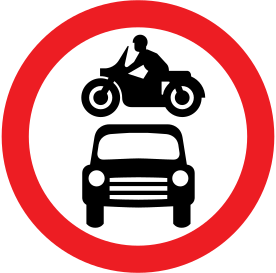
No motor vehicles
Regulatory sign
No motor vehicles
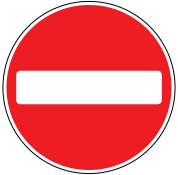
No entry
Regulatory sign
No entry for vehicles.
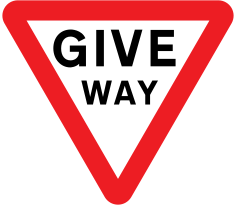
Give way
Regulatory sign
You must give way to traffic on the major road ahead.
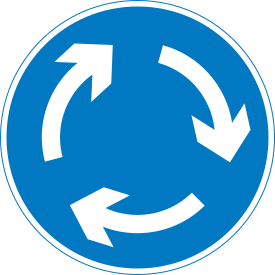
Mini-roundabout
Regulatory sign
Give way to traffic from your immediate right and go round the central markings.
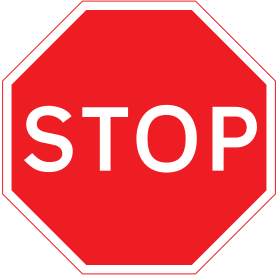
Stop
Regulatory sign
You must stop at the white line, then go only when it's safe.
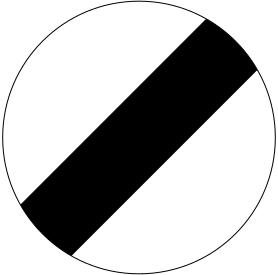
National speed limit
Regulatory sign
The national speed limit applies.
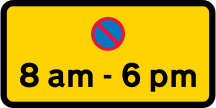
No waiting
Regulatory sign
You must not wait or park here during the times shown.
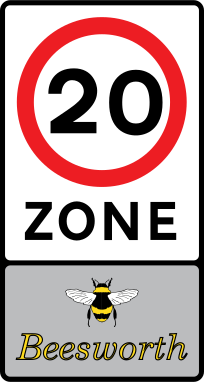
20 mph zone
Regulatory sign
A 20 mph speed limit applies throughout the zone.
All 72 regulatory signs
Each sign links to its meaning, the rule behind it and the signs it is mixed up with. We add signs once each one has been checked against official sources.
- Stop and give way (12)
- Entry and turning (5)
- Waiting and stopping (11)
- Speed limits (6)
- Mandatory instructions (15)
- Vehicle restrictions (23)
Stop and give way (12)
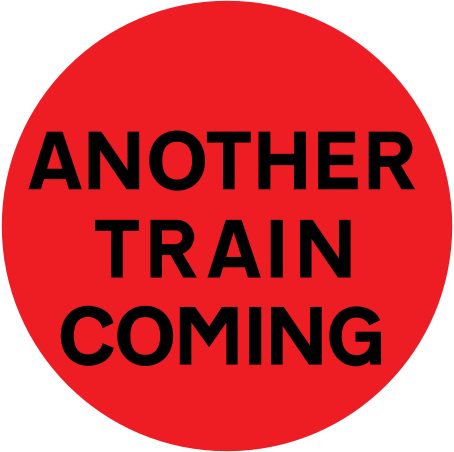
Another train coming
Regulatory sign
Another train is coming: keep waiting
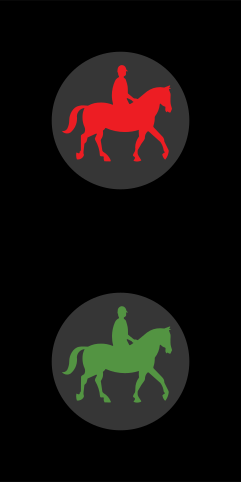
Equestrian crossing far-side signals
Regulatory sign
Far-side signals for horse riders
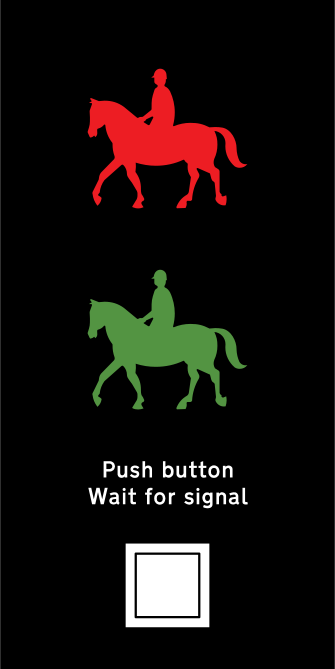
Equestrian crossing signals
Regulatory sign
Signals for horse riders at a crossing
Give way
Regulatory sign
You must give way to traffic on the major road ahead.
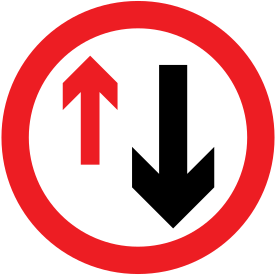
Give way to oncoming vehicles
Regulatory sign
Give priority to vehicles coming from the opposite direction.
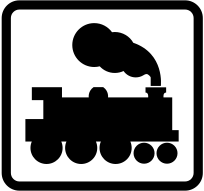
Give way to trains (locomotive plate)
Regulatory sign
Give way to trains at an open crossing
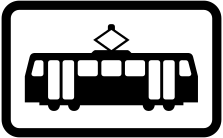
Give way to trams (tram plate)
Regulatory sign
Give way to trams
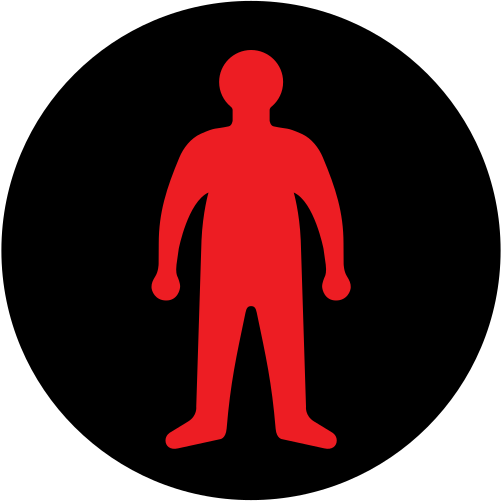
Level crossing pedestrian signal
Regulatory sign
Pedestrians must not cross the railway
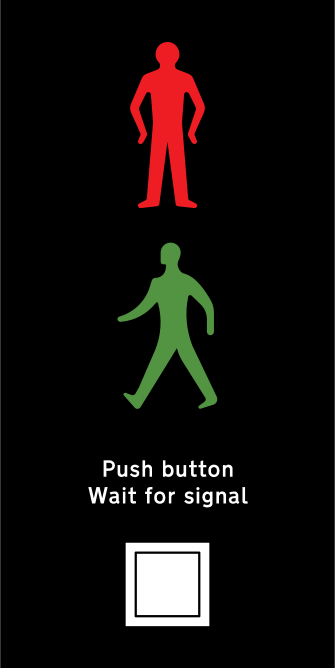
Puffin crossing signals
Regulatory sign
Puffin crossing signals for pedestrians
Stop
Regulatory sign
You must stop at the white line, then go only when it's safe.
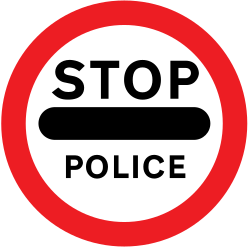
Stop (police)
Regulatory sign
Stop when shown by the police
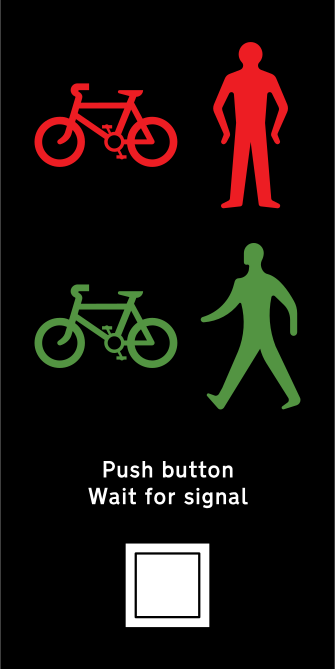
Toucan crossing signals
Regulatory sign
Signals for pedestrians and cyclists at a toucan crossing
Entry and turning (5)
No entry
Regulatory sign
No entry for vehicles.
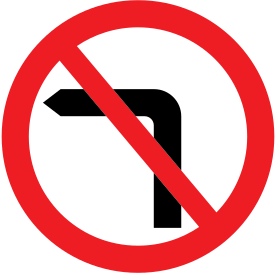
No left turn
Regulatory sign
You must not turn left
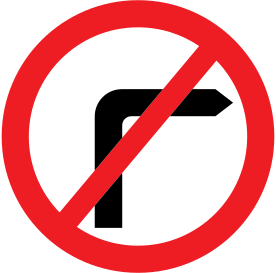
No right turn
Regulatory sign
You must not turn right at the junction ahead.
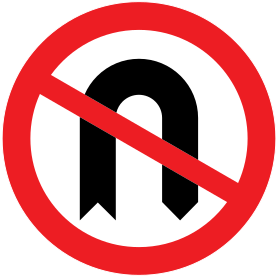
No U-turns
Regulatory sign
U-turns are not allowed where this sign applies.
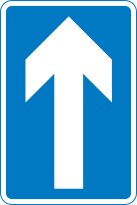
One-way traffic
Regulatory sign
Traffic on this road may only travel in the direction of the arrow.
Waiting and stopping (11)
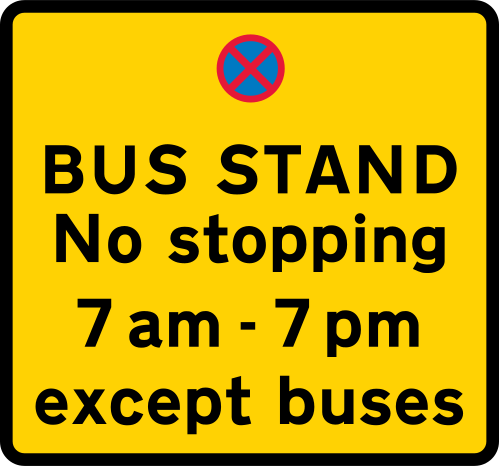
Bus stand
Regulatory sign
A bus stand: no stopping for other vehicles at the times shown
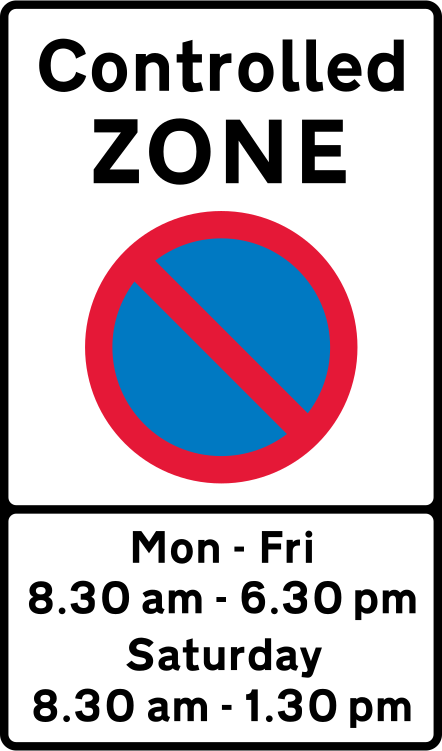
Controlled parking zone
Regulatory sign
The entrance to a controlled parking zone
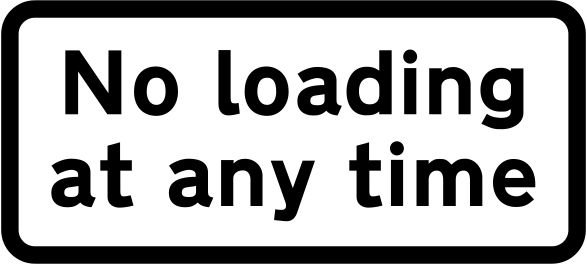
No loading at any time
Regulatory sign
No loading or unloading at any time
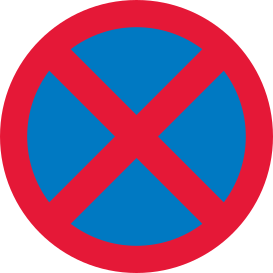
No stopping (clearway)
Regulatory sign
No stopping on the main carriageway at any time, not even to pick up or set down passengers.
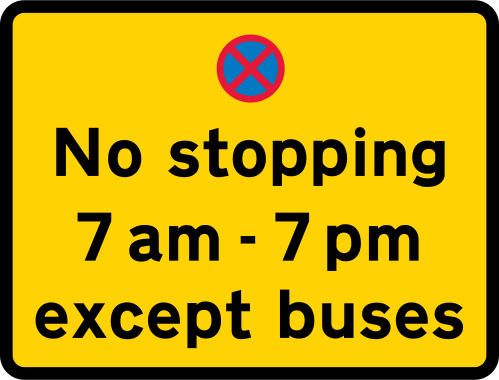
No stopping except buses
Regulatory sign
No stopping except local buses during the times shown
No waiting
Regulatory sign
You must not wait or park here during the times shown.
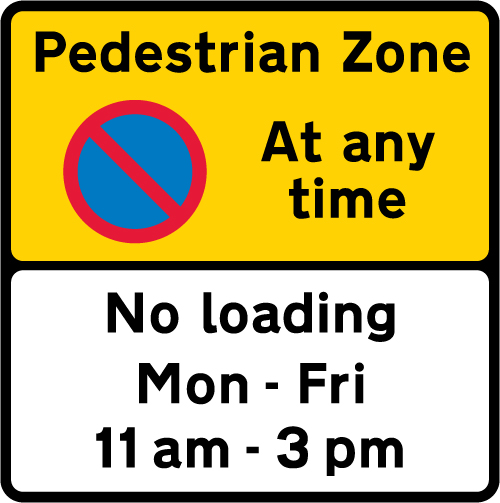
Pedestrian zone waiting restriction
Regulatory sign
The waiting restrictions in a pedestrian zone
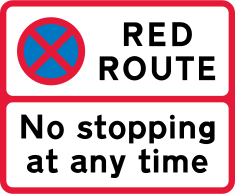
Red route: no stopping at any time
Regulatory sign
No stopping at any time on a red route
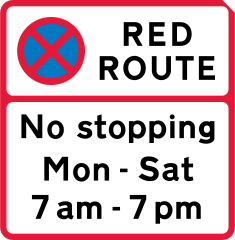
Red route: no stopping at times shown
Regulatory sign
No stopping during the times shown on a red route
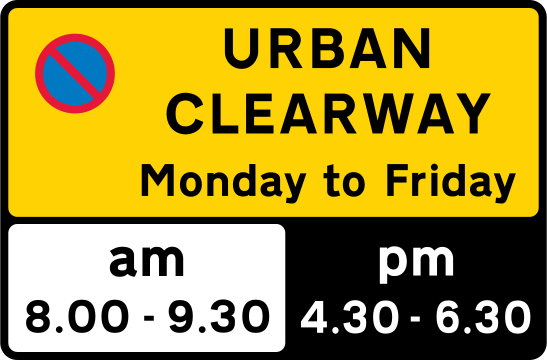
Urban clearway
Regulatory sign
No stopping during the times shown, except to pick up or set down passengers.
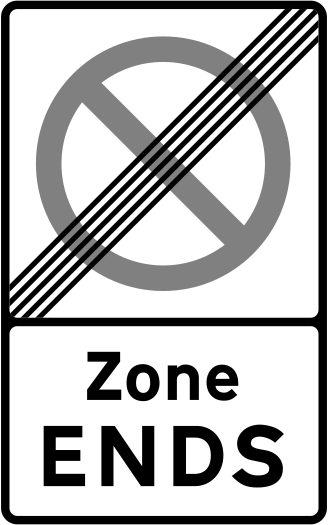
Zone ends
Regulatory sign
The end of a controlled parking zone
Speed limits (6)
20 mph zone
Regulatory sign
A 20 mph speed limit applies throughout the zone.
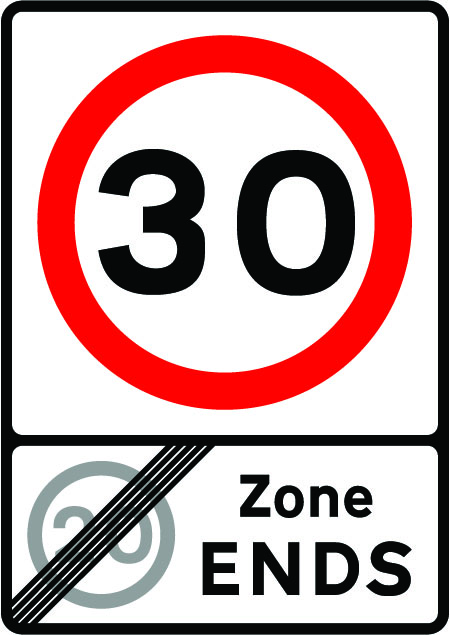
End of 20 mph zone
Regulatory sign
The end of a 20 mph zone
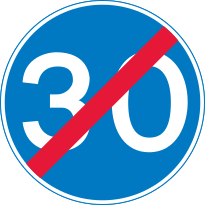
End of minimum speed
Regulatory sign
The end of a minimum speed requirement
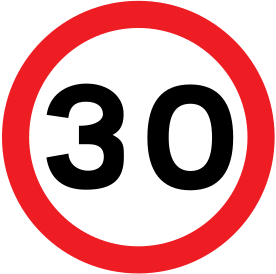
Maximum speed limit
Regulatory sign
You must not go faster than the number shown, in mph.
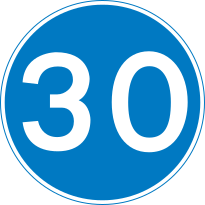
Minimum speed
Regulatory sign
You must not go slower than the speed shown, unless it's impracticable or unsafe.
National speed limit
Regulatory sign
The national speed limit applies.
Mandatory instructions (15)
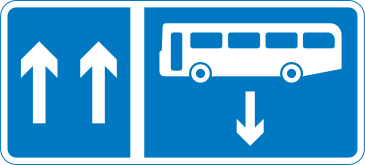
Contraflow bus lane
Regulatory sign
Buses use a lane against the flow of traffic
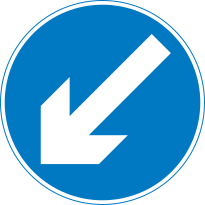
Keep left
Regulatory sign
You must keep to the left of the sign.
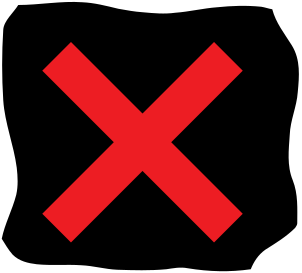
Lane closed (red cross)
Regulatory sign
The lane is closed
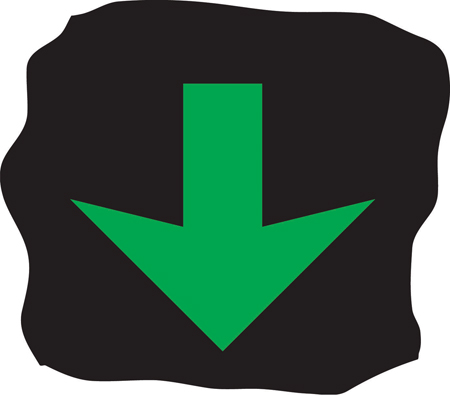
Lane open (green arrow)
Regulatory sign
The lane is open
Mini-roundabout
Regulatory sign
Give way to traffic from your immediate right and go round the central markings.
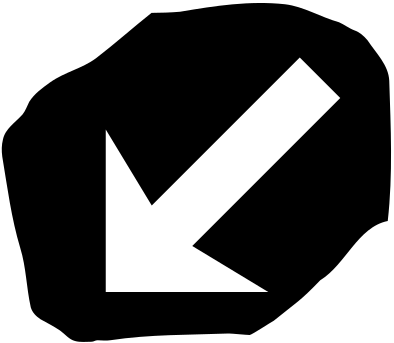
Move to the next lane (white arrow)
Regulatory sign
Move to the next lane on the left
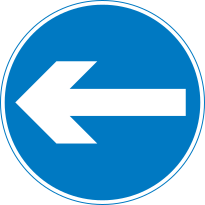
Proceed in direction indicated
Regulatory sign
You must go the way the arrow points
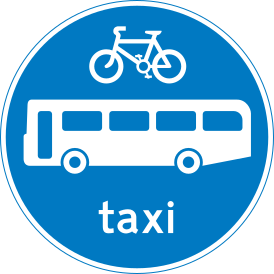
Route for buses, cycles and taxis
Regulatory sign
A route for buses, pedal cycles and taxis only
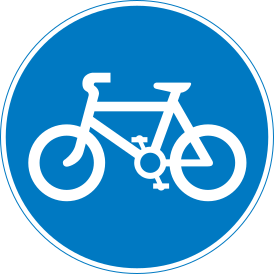
Route for pedal cycles only
Regulatory sign
A route for pedal cycles only
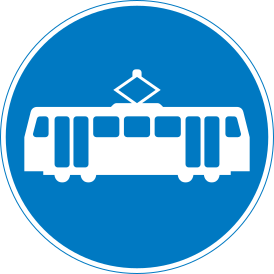
Route for trams only
Regulatory sign
A route for trams only
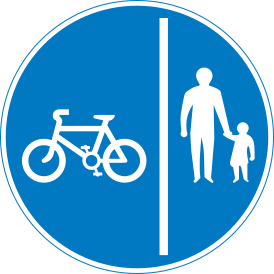
Separated route for cyclists and pedestrians
Regulatory sign
Separate sides for pedal cycles and pedestrians
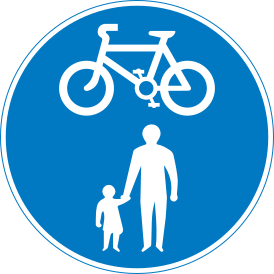
Shared route for cyclists and pedestrians
Regulatory sign
A path shared by pedal cycles and pedestrians
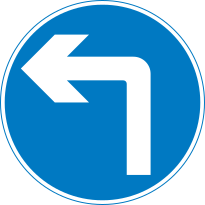
Turn left ahead
Regulatory sign
You must turn left at the junction ahead.
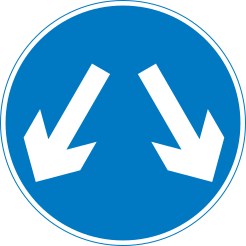
Vehicles may pass either side
Regulatory sign
You may pass either side
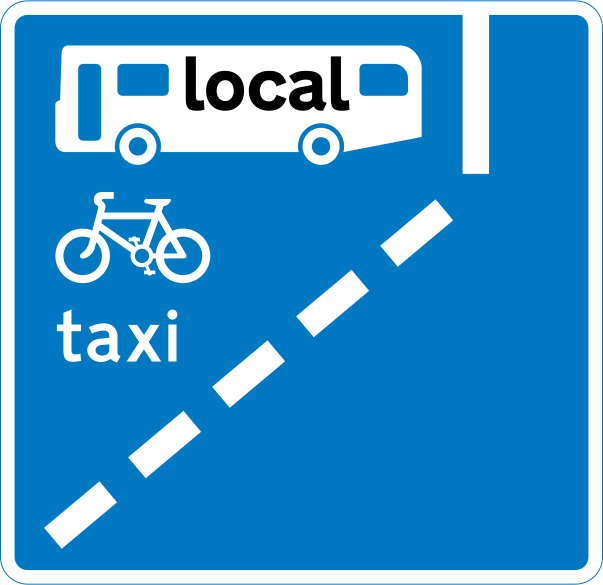
With-flow bus lane ahead
Regulatory sign
A bus lane ahead for the vehicles shown
Vehicle restrictions (23)
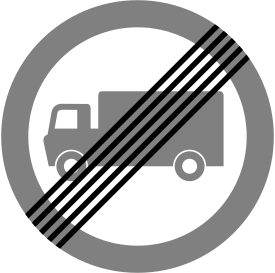
End of goods vehicles restriction
Regulatory sign
The end of the goods vehicles restriction
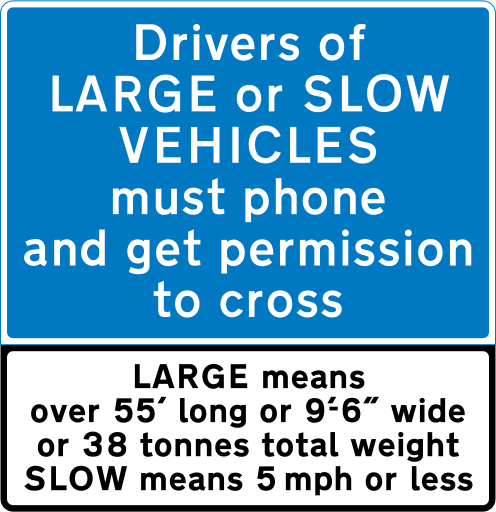
Large or slow vehicles: phone to cross
Regulatory sign
Large or slow vehicles must phone for permission
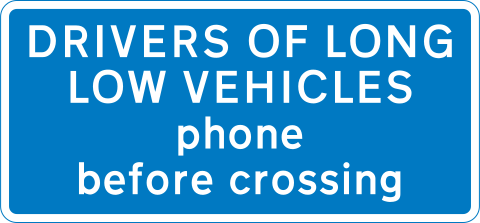
Long low vehicles: phone before crossing
Regulatory sign
Long low vehicles must phone before crossing
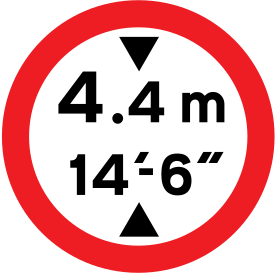
Maximum height
Regulatory sign
No vehicles over the height shown
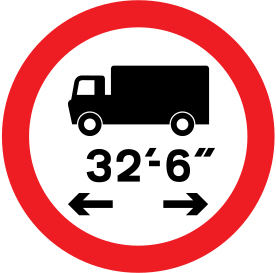
Maximum length
Regulatory sign
No vehicles longer than the length shown
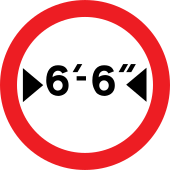
Maximum width
Regulatory sign
No vehicles wider than the width shown
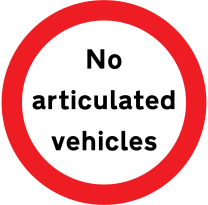
No articulated vehicles
Regulatory sign
No articulated vehicles
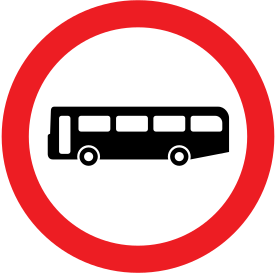
No buses
Regulatory sign
No buses or vehicles carrying more than 8 passengers
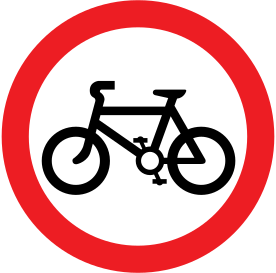
No cycling
Regulatory sign
No cycling
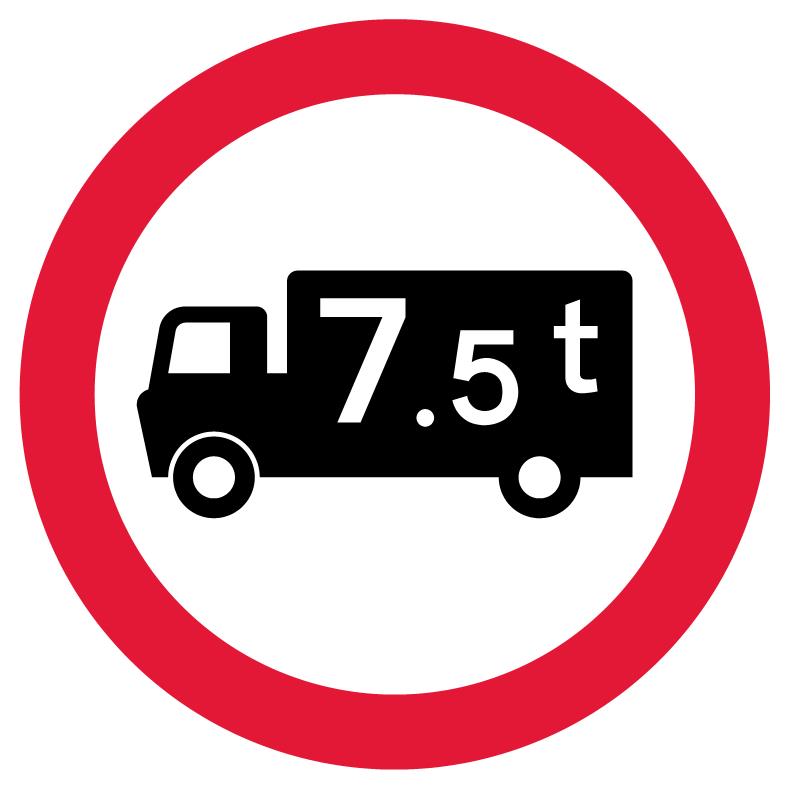
No goods vehicles over maximum gross weight
Regulatory sign
No goods vehicles over the weight shown
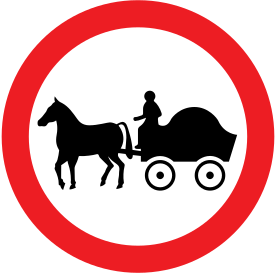
No horse-drawn vehicles
Regulatory sign
No horse-drawn vehicles
No motor vehicles
Regulatory sign
No motor vehicles
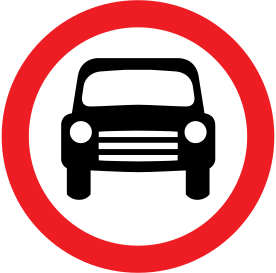
No motor vehicles except solo motorcycles
Regulatory sign
No motor vehicles except solo motorcycles
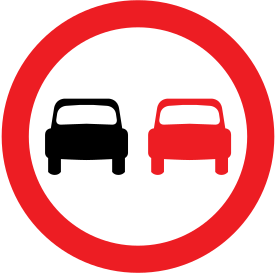
No overtaking
Regulatory sign
You must not overtake until a sign cancels the restriction.
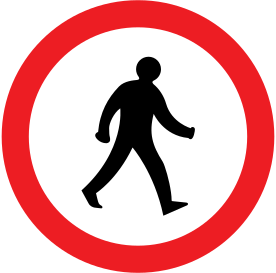
No pedestrians
Regulatory sign
No pedestrians
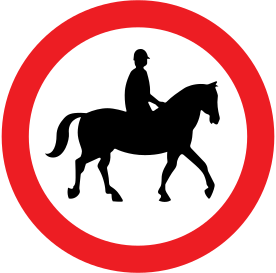
No ridden or accompanied horses
Regulatory sign
No ridden or accompanied horses
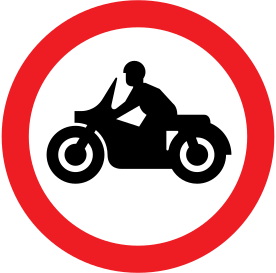
No solo motorcycles
Regulatory sign
No solo motorcycles
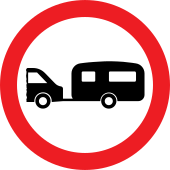
No towed caravans
Regulatory sign
No towed caravans
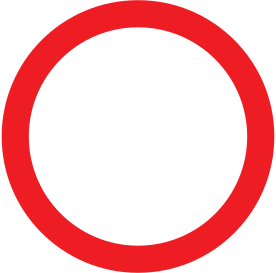
No vehicles
Regulatory sign
No vehicles may use the road, except pedal cycles being pushed by hand.
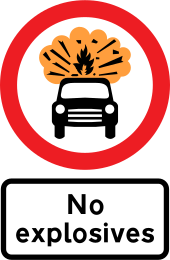
No vehicles carrying explosives
Regulatory sign
No vehicles carrying explosives
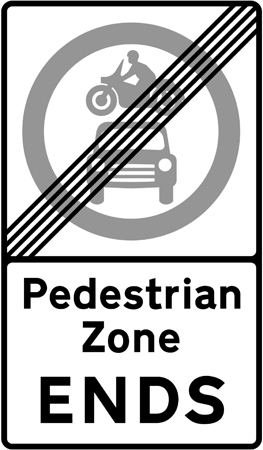
Pedestrian zone ends
Regulatory sign
The end of a pedestrian zone
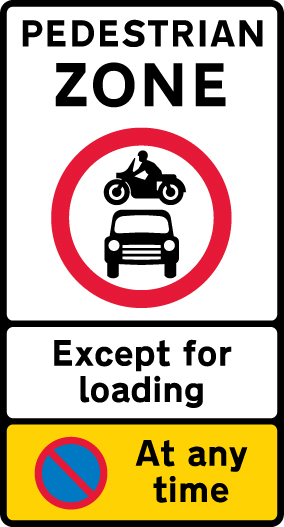
Pedestrian zone: no motor vehicles
Regulatory sign
A pedestrian zone: no motor vehicles, cycling allowed
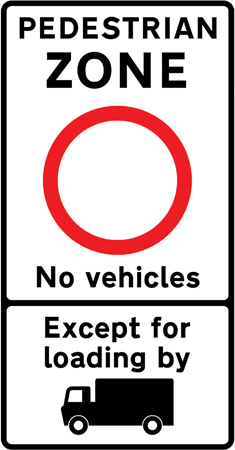
Pedestrian zone: no vehicles
Regulatory sign
A pedestrian zone: no vehicles except as shown
Learn regulatory signs by heart
Share
Pinterest (opens in a new tab)Facebook (opens in a new tab)X (opens in a new tab)WhatsApp (opens in a new tab)EmailRegulatory signs: common questions
Do I have to obey regulatory signs?
Yes. Regulatory signs give orders, such as no entry, speed limits and stop. Ignoring them can be an offence, and some carry penalty points.
Why are Stop and Give way different shapes?
Most regulatory signs are circles. Stop is an octagon and Give way is an upside-down triangle, which gives them extra prominence so they are easy to recognise.
What does a plate under a regulatory sign mean?
A plate can show when the order applies or who is exempt. For example, 'except for access' lets you in to reach premises or land next to the road when there is no other route.
What is the difference between a red ring and a blue circle?
A red ring or red circle prohibits something, such as no right turn. A blue circle gives a positive instruction, such as turn left ahead or keep left.
Related categories
Test yourself on regulatory signs
Take the Regulatory Signs Quiz: 10 questions, with an explanation after every answer.