Warning sign
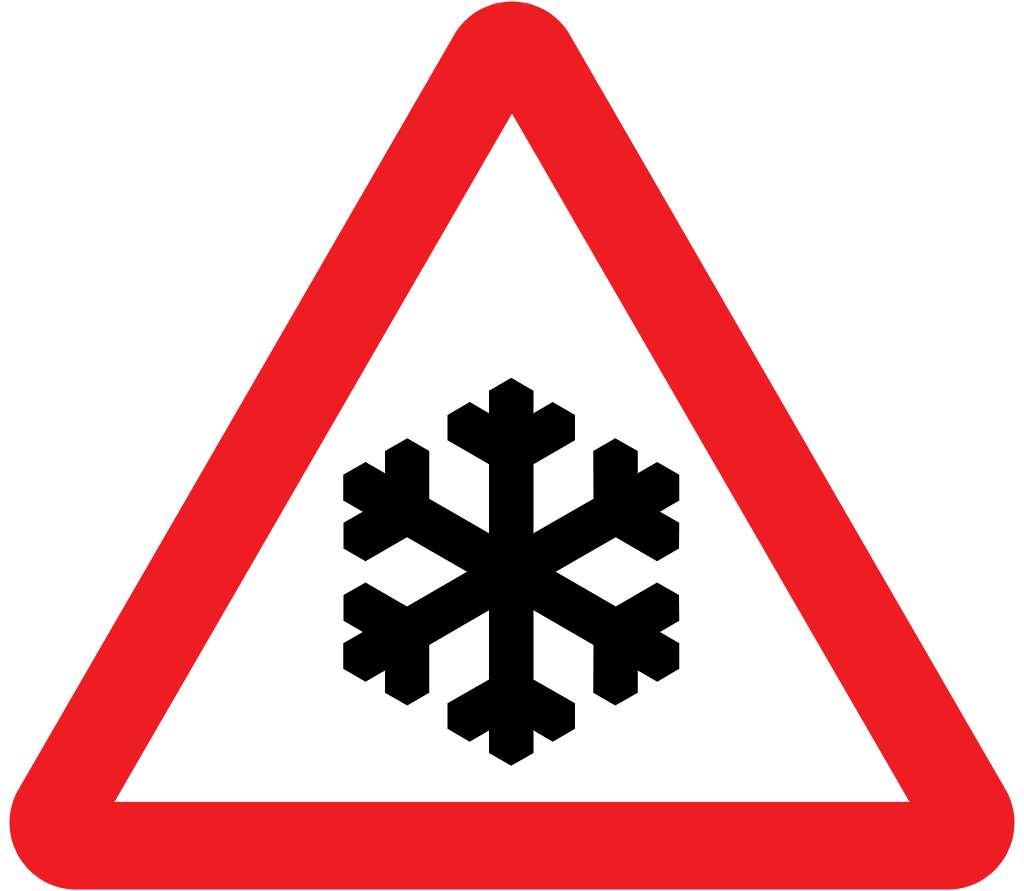
Risk of ice sign
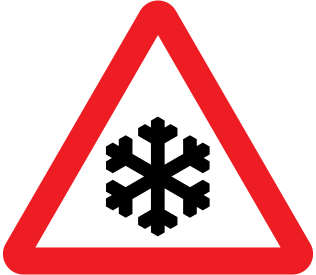
What does the Risk of ice sign mean?
Warns that the road ahead may be icy. Slow down, leave a much bigger gap and drive very gently.
Also known as: Snowflake sign
What it means
Ice is likely on the road ahead in cold weather. A plate may say snowdrifts instead.
The snowflake warns of ice or snow on the road surface.
On ice it can take up to ten times as far to stop. Slow down, keep well back, and brake, steer and accelerate as gently as you can.
Where you'll see it
On exposed roads, hills and bridges that freeze before other roads.
Rules to know
The sign warns of a risk of ice. 'Ice' may be varied to 'Snowdrifts'.
Know Your Traffic Signs, p. 13
In icy or snowy weather, keep well back from the road user in front, as stopping distances can be ten times greater than on dry roads.
The Highway Code, Rule 230
On icy roads, drive at a slow speed in as high a gear as possible, and accelerate and brake very gently.
The Highway Code, Rule 231
Common mistakes
Mistake: Thinking a gritted road cannot be icy.
Instead: Drive with care even if the road has been treated. Ice can still form, especially in shaded spots.
Test yourself
Recalling the answer helps it stick. Pick an answer to see how you did.
Question 1 of 1
What does this sign mean?
Ready for more? Take the Warning Signs Quiz
Download this sign
© Crown copyright. Free to reuse under the Open Government Licence v3.0, as long as the sign is reproduced accurately and not in a misleading context.
Related signs
Similar
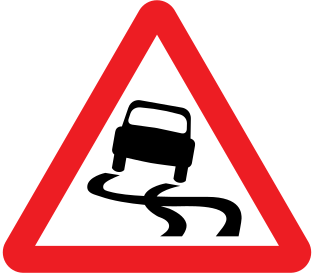
Slippery road
Warning sign
Another warning about grip.
See also
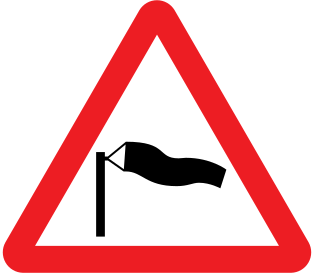
Side winds
Warning sign
Another weather warning.
More warning signs
All warning signs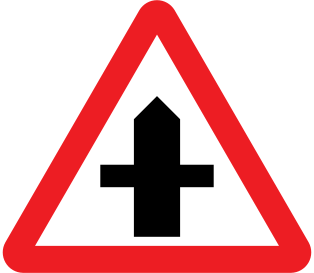
Sources
- Know Your Traffic Signs (Department for Transport, Sixth edition, 2023), Warning signs, p. 13
- The Highway Code, Rule 230
Sign image: Department for Transport, Traffic sign images (diagram 554.2). © Crown copyright, reused under the Open Government Licence v3.0.
Last reviewed 6 October 2026. This page explains the sign in our own words; for the full rules, see The Highway Code. How we source and check content