Motorway signs
Motorway signs show where motorway rules begin and end, guide you to junctions, and warn you about lane closures and speed limits on the road ahead.
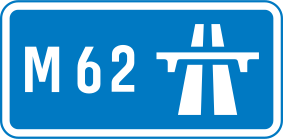
Direction signs on motorways have a blue background. Overhead signals can change to show lane closures and temporary speed limits.
Blue direction signs and overhead signals
Type its name or what it shows, or pick the shape and colour you saw.
What to do when you see a motorway sign
- 1
Watch the overhead signals: a speed limit in a red circle is mandatory, and a red X means do not use that lane.
- 2
Move into the correct lane early. Junction signs usually appear 1 mile and half a mile before the exit.
- 3
Use the countdown markers to judge the distance to the start of the deceleration lane: each bar is about 100 yards.
Most looked-up motorway signs
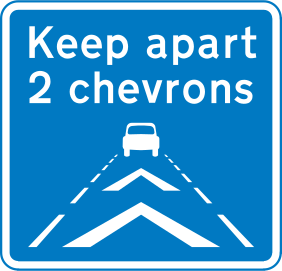
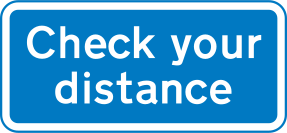
Keep apart 2 chevrons
Motorway sign
Keep at least two chevrons from the vehicle in front
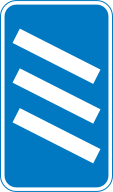
Countdown markers
Motorway sign
Distance to the next exit: about 100 yards a bar
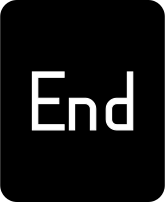
End of restrictions (motorway signal)
Motorway sign
End of temporary restrictions
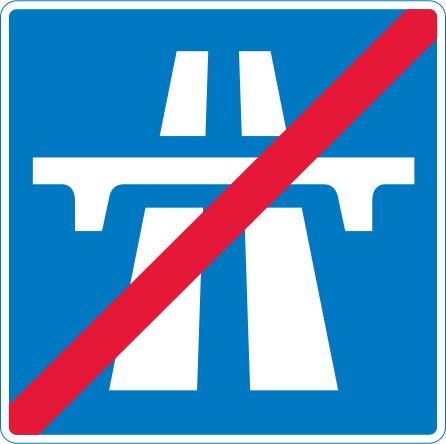
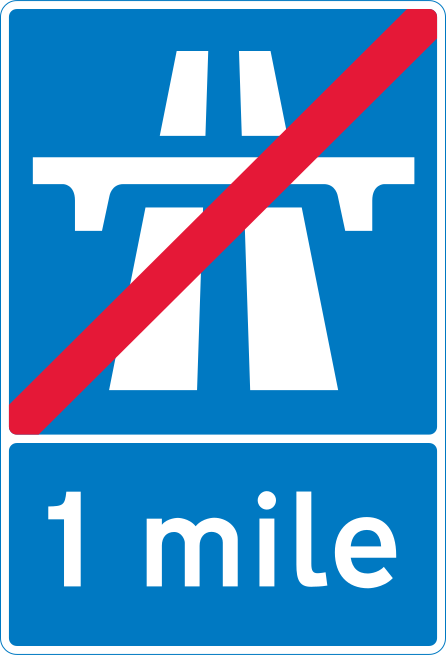
End of motorway
Motorway sign
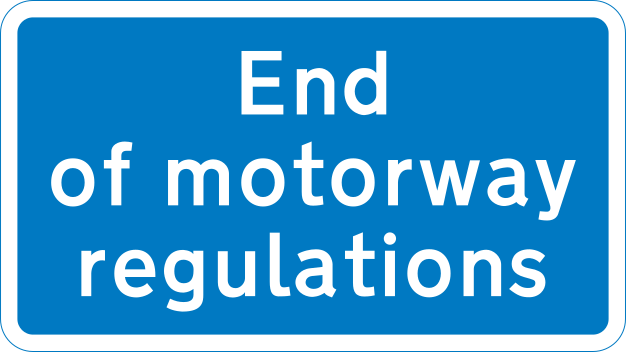
Motorway regulations end here.
All 16 motorway signs
Each sign links to its meaning, the rule behind it and the signs it is mixed up with. We add signs once each one has been checked against official sources.
- Start and end of motorway (4)
- Junctions and exits (4)
- Signals and lane control (6)
- Keeping your distance (2)
Start and end of motorway (4)
Junctions and exits (4)
Countdown markers
Motorway sign
Distance to the next exit: about 100 yards a bar
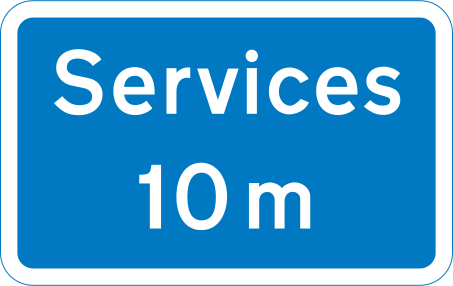
Distance to next services
Motorway sign
The distance to the next motorway services
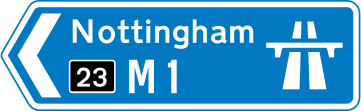
Motorway direction
Motorway sign
Directions to or along a motorway

Motorway services entrance
Motorway sign
The entrance to a motorway service area
Signals and lane control (6)
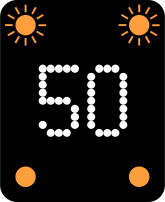
Advised speed (motorway signal)
Motorway sign
Maximum speed advised for the conditions
End of restrictions (motorway signal)
Motorway sign
End of temporary restrictions
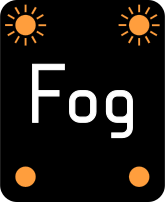
Fog warning (motorway signal)
Motorway sign
Risk of fog ahead
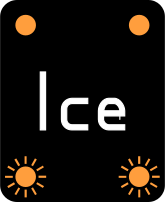
Ice signal
Motorway sign
Risk of ice ahead on the motorway
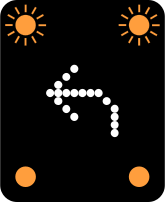
Move to adjacent lane (motorway signal)
Motorway sign
Move to the lane the arrow shows
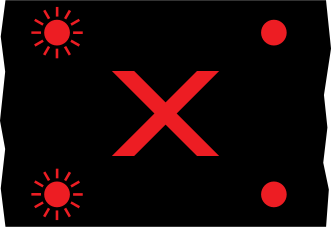
Red X: lane closed
Motorway sign
Lane closed: do not drive in it
Learn motorway signs by heart
Share
Pinterest (opens in a new tab)Facebook (opens in a new tab)X (opens in a new tab)WhatsApp (opens in a new tab)EmailMotorway signs: common questions
Are the speed limits on overhead motorway signs legal limits?
Yes, when the number is shown in a red circle. A speed shown without a red circle is the maximum speed advised for the conditions.
What does a red X on a motorway mean?
A red X, with flashing red lights, means do not proceed in the lane below it. Move safely to an open lane, and do not drive in a closed lane.
What are the countdown markers before a motorway exit?
They count down the distance to the start of the deceleration lane. Each bar represents about 100 yards.
Why are motorway signs blue?
Blue backgrounds mark motorway direction signs, so you can tell motorway routes apart from primary routes (green) and other roads (white).
Related categories
Test yourself on motorway signs
Take the Motorway Signs Quiz: 10 questions, with an explanation after every answer.