Road marking
Zig-zag lines at crossings
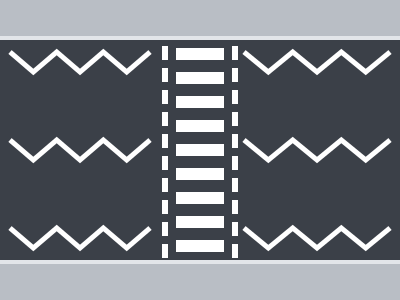
What do zig-zag lines at crossings mean?
White zig-zags mark the area around a pedestrian crossing. You must not park or overtake there.
Also known as: White zig-zag lines
What it means
You must not park or wait in the zig-zag area, and you must not overtake the vehicle nearest the crossing.
The zig-zags keep the approach to the crossing clear so drivers and pedestrians can see each other.
Do not overtake the moving vehicle nearest the crossing, or the vehicle nearest the crossing that has stopped to give way to pedestrians.
Where you'll see it
On both sides of zebra, pelican, puffin and toucan crossings.
Rules to know
You must not park on a crossing or in the area covered by the zig-zag lines.
The Highway Code, Rule 191
You must not overtake the moving vehicle nearest the crossing, or the vehicle nearest the crossing which has stopped to give way to pedestrians.
The Highway Code, Rule 191
Pedestrians should never cross the road within the zig-zag area of a zebra crossing.
Know Your Traffic Signs, p. 148
Common mistakes
Mistake: Stopping on the zig-zags to drop someone off.
Instead: You must not stop or park in the zig-zag area. Find somewhere safe away from the crossing.
Test yourself
Recalling the answer helps it stick. Pick an answer to see how you did.
Question 1 of 2
What does this marking mean?
Ready for more? Take the Road Markings Quiz
Related markings and signs
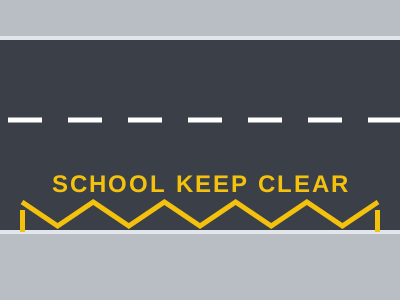
Often confused with
School keep clear markings
Road marking
Yellow zig-zags outside schools.
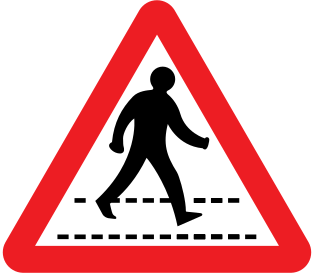
Used with
Pedestrian crossing
Road sign
The warning sign for a zebra crossing ahead.
More road markings
All road markings
Sources
- The Highway Code, Road markings
- The Highway Code, Rule 191
- Know Your Traffic Signs (Department for Transport, Sixth edition, 2023), Zebra crossings, p. 148
The diagram is our own illustration of the marking, not to scale. Official drawings are in Know Your Traffic Signs and the Highway Code.
Last reviewed 6 October 2026. This page explains the marking in our own words; for the full rules, see The Highway Code. How we source and check content